Last updated 2026-08-18
TL;DR
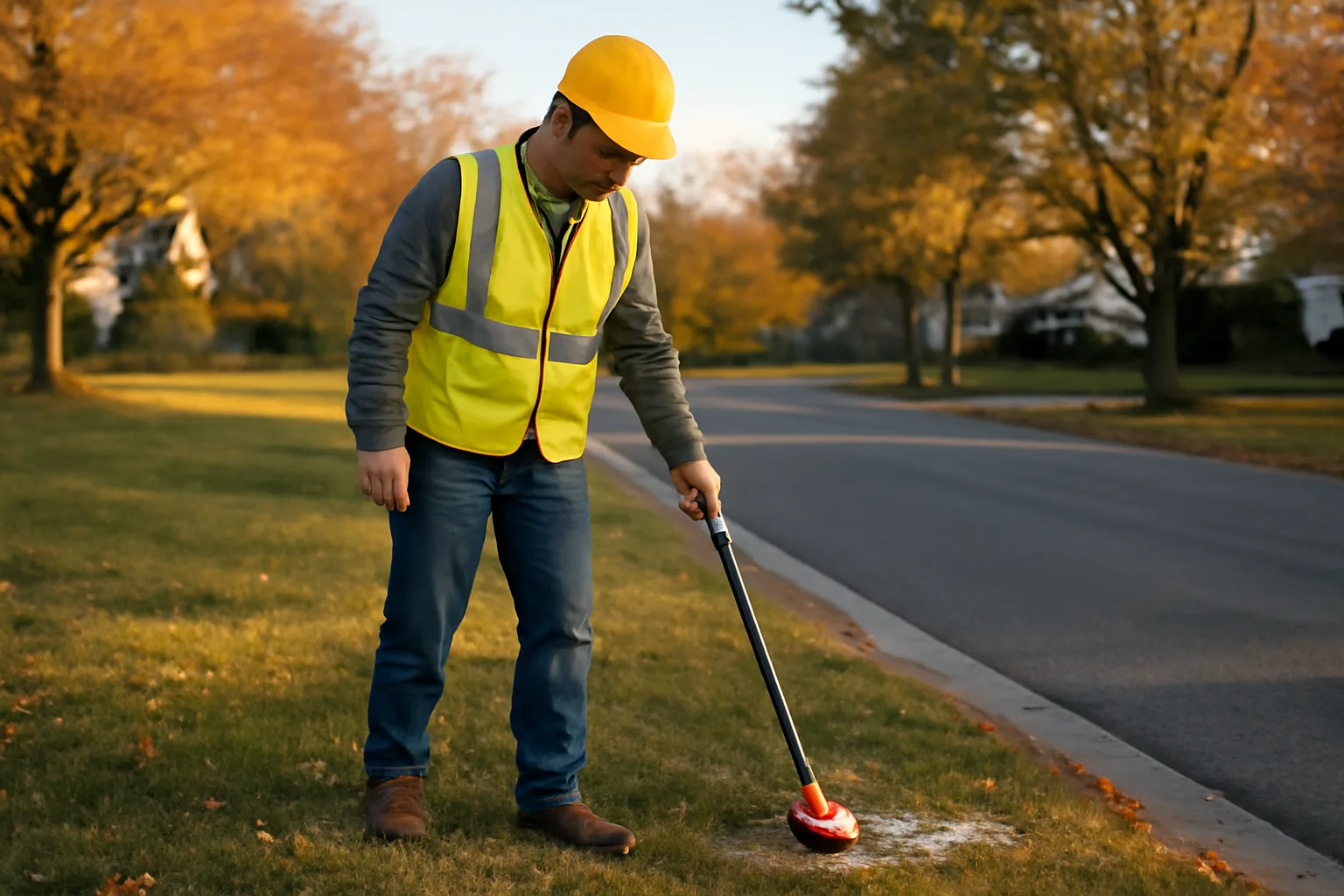
Delaware does not require a state-issued utility locator license. The path runs through Miss Utility of Delmarva as the 811 center. You need a Delaware business license, Miss Utility membership, insurance, and operator training. Total startup costs run $3,000 to $8,000, and getting operational takes 3 to 6 months, mostly for training, insurance binding, and membership processing. No state board exam exists. The real gatekeepers are the facility owners who issue locate tickets.
Do you need a license for utility locating in Delaware?
No. Delaware has no professional utility locator licensing board and no state statute that licenses private locating contractors. Search for a "Delaware utility locator license" and you'll come up empty, because one does not exist. The Delaware Underground Utility Damage Prevention and Safety Act (Title 26, Chapter 8) governs excavation and the one-call system, but it puts licensing authority on facility owners, not on a state board for locators.
Here's what you actually need. Miss Utility of Delmarva membership as an excavator or locator. A Delaware general business license from the Division of Revenue. Insurance. And contractual authorization from facility operators whose lines you'll mark. The law says "No person shall make or begin any excavation or demolition without first obtaining the positive response required by this chapter" [1]. That's the locate request flow, not a locator license.
Say you're a contractor marking third-party utilities, like private electric lines past the meter. Delaware defines that work under "excavation" when you dig to verify. The mark-out itself is different. The state regulates the notification center and the facility owner's locate obligation, not the person swinging the wand. The Delaware Public Service Commission oversees pipeline safety for gas and hazardous liquids under federal PHMSA delegation. No PSC license for private locators exists either.
The closest thing to a license is your Miss Utility ticket access and a facility owner's approval to respond on their behalf. If you're in-house for a utility, your employer handles all of that. If you're independent, you'll need written contracts with each owner whose marks you clear. That's the whole gate.
How much does it cost to start a utility locator in Delaware?
Plan on $4,500 to $8,500 all-in for a working one-person operation with decent equipment. You can scrape by around $3,000 if you already own a truck and buy used gear. Here's the breakdown.
Business formation and registration: $100 to $300. The Delaware General Business License through the Division of Revenue's One Stop portal costs $75 for the first location [2]. An LLC from the Delaware Division of Corporations costs $90 to form, plus $50 for a good standing certificate if you need one [3]. A registered agent adds $50 to $150 a year.
Miss Utility membership has no fee for excavators, but contractor members requesting positive response access pay tiered fees based on ticket volume. The Miss Utility of Delmarva website lists current fee schedules. As of 2025, a low-volume member might pay $100 to $300 annually for web ticket management access. Call and confirm current numbers. Nobody publishes them in a tidy public fee table.
Insurance is the budget eater. Most facility owners and general contractors require $1 million general liability and $2 million aggregate, plus workers' comp if you have employees. For a solo locator with no claims history, expect $1,800 to $4,000 a year. Auto liability for a commercial vehicle adds $1,200 to $2,400 a year. Delaware's workers' comp requirement kicks in the moment you have one employee. No solo exemption exists [4]. Budget $500 to $1,500 a year if you hire.
Equipment: a used RD8100 or Vivax vLoc3-Pro transmitter/receiver set runs $2,500 to $4,500 used, or $6,000 to $9,000 new. A good pipe and cable locator is the one thing you cannot skip. Add $400 to $800 for a paint wand and marking flags, $200 for a concrete saw or pry bar, and $300 to $600 for PPE (FR clothing, hard hat, safety vest, boots). You already need a reliable truck or van, so figure commercial vehicle costs separately.
Training: if you're new, budget $1,500 to $3,000 for a 40-hour locating course from Staking University, Utility Training Academy, or a manufacturer program. Some facility owners will train you for free if you contract with them directly. That's rare for independents.
Total table:
| Cost item | Low range | High range | Notes |
|---|---|---|---|
| Delaware business license | $75 | $75 | One Stop portal, one location [2] |
| LLC formation | $90 | $140 | Division of Corporations; optional but smart [3] |
| Miss Utility membership (annual) | $100 | $300 | Confirm with Miss Utility directly |
| General liability insurance | $1,800 | $4,000 | $1M/$2M typical requirement |
| Commercial auto insurance | $1,200 | $2,400 | Depends on vehicle and record |
| Locator equipment (transmitter/receiver) | $2,500 | $9,000 | Used vs. new; RD or Vivax |
| Marking supplies, tools, PPE | $900 | $1,600 | Flags, paint, boots, vest, hard hat |
| Training course (40-hour) | $1,500 | $3,000 | Staking U, UTA, or manufacturer |
| Total | $8,165 | $20,515 | With truck, training, and new gear |
Realistic minimum if you have a truck and buy used gear: around $3,650 to $5,300 plus insurance. Nobody gets out the door for under three grand.
How long does it take to start utility locating in Delaware?
Three to six months from zero to first paid ticket, assuming you move fast on insurance and training. The individual steps don't take long. It's the sequencing and the waiting that eat weeks.
Week 1 to 2: Register the business. Delaware's One Stop portal turns a business license around in 1 to 3 business days. LLC formation through the Division of Corporations takes 1 day online, a week by mail. An EIN from the IRS is instant online.
Week 2 to 4: Insurance binding. An independent agent can quote in 48 hours, but binding a policy with the right coverages often takes 2 to 4 weeks once underwriters ask for your experience, vehicle VIN, and contract examples. Fresh entrant with no locate work history? Expect more back-and-forth.
Week 3 to 8: Training. A 40-hour class takes a week. But scheduling can push you out a month or two depending on course availability. Staking University and UTA run monthly cohorts, not on-demand. If you train with a manufacturer rep, availability varies by region. Field mentorship with an experienced locator, which I'd consider mandatory before you touch a live gas line, adds another 2 to 4 weeks minimum. Nobody should take tickets after a classroom course and zero supervised field hours.
Week 4 to 12: Miss Utility setup and owner contracts. Register with Miss Utility of Delmarva as a contractor member. That part is fast, a few days once you have your insurance certificate and business docs. The bottleneck is getting facility owners to authorize you as a contract locator. Each owner (Delmarva Power, Chesapeake Utilities, Verizon, Comcast, water districts, counties) has its own contractor qualification process. Some want proof of training, insurance, and equipment specs. A few require a supervised ride-along before they'll add you to their positive response list. This can drag 4 to 8 weeks. Start these conversations early, before training ends.
Month 2 to 6: First tickets. Once you're in Miss Utility's system and one or two facility owners have approved you, tickets flow. Healthy pipeline volume, enough to replace a paycheck, takes 3 to 6 months of relationship building. Most independents start with one owner and expand from there.
Honest range: 3 months if you train fast, one owner approves quickly, and insurance doesn't stall. Six months is more common for a thorough setup with multiple owner contracts.
What is Miss Utility of Delmarva and why does it matter for Delaware locators?
Miss Utility of Delmarva runs the one-call center for Delaware and Maryland's Eastern Shore under Delaware Code Title 26, Chapter 8 [1]. Every locate request for public utilities flows through them. They don't license locators, but they control ticket access, and that's a hold over your whole business.
When an excavator calls 811 or files online, Miss Utility creates a ticket and transmits it to member facility operators. Those operators then mark their own lines, dispatch an in-house crew, or send the ticket to a contract locating firm. That last option is where you fit, if an operator has added you to their positive response list.
"Positive response" is the statutory term. Delaware law requires a positive response to every ticket: a mark-out or a clearance notification. As a contract locator, you provide that response on behalf of a member facility owner. Without that contractual link, you don't see tickets at all.
Miss Utility membership splits into excavator membership (free, for those who dig) and facility operator membership (fee-based, for those who own or locate lines). A private locating firm registers under the member category that matches its contracts. Annual fees for a low-volume locator typically land in the $100 to $300 range. Call Miss Utility at 1-800-282-8555 for the current contractor member fee schedule. Online transparency is limited.
Miss Utility also runs a damage prevention committee and offers free excavator awareness training. Locator-specific training is not provided by the one-call center. Its Board of Directors includes utility representatives who shape policy. If you're serious about building a Delaware locating business, go to their quarterly stakeholder meetings. That's where owner relationships start.
What Delaware business license and registration do you need?
Every business operating in Delaware needs a State of Delaware Business License from the Division of Revenue. No exceptions for locators. The license costs $75 for the first business location and renews annually [2]. You apply through the Delaware One Stop portal.
Form an LLC or corporation and you also file with the Delaware Division of Corporations. Delaware's LLC formation fee is $90 [3]. The Division of Corporations is famously fast, online filings process same-day. You'll also pay an annual franchise tax: $300 minimum for LLCs, due June 1st. Miss it and penalties stack.
Do you need a local city or county license? Maybe. Wilmington and Dover don't levy separate business licenses for service contractors, but Newark and some beach towns do. Kent County and Sussex County don't require county-level business licenses for locating work. If you're based in a municipality like Rehoboth Beach or Middletown, check their clerk's office for local business license requirements. These typically run $25 to $100 annually.
Plan to contract directly with DelDOT or any state agency? You'll also need a Delaware vendor registration through the state's supplier portal. That's separate and free, but takes 2 to 3 weeks to process.
Employer obligations: hire even one W-2 employee and you register with the Delaware Division of Unemployment Insurance and the Office of Workers' Compensation [4]. Delaware has no solo-proprietor workers' comp exemption. If you're the only worker and an LLC member, you might opt out, but confirm with your insurance agent. Any employee triggers mandatory coverage.
What insurance do facility owners actually demand in Delaware?
The insurance conversation in Delaware is driven by facility owners, not state law. The Delaware Underground Utility Damage Prevention Act doesn't prescribe insurance minimums for locators. Delmarva Power, Chesapeake Utilities, Artesian Water, Tidewater Utilities, Verizon, and the various municipal electric and water departments each set their own contractor insurance requirements.
What you'll typically see demanded:
- General liability: $1 million per occurrence, $2 million aggregate. This is the floor.
- Completed operations coverage: usually inside GL, but some owners want it listed separately.
- Commercial auto: $1 million combined single limit.
- Workers' compensation: statutory limits (required with employees).
- Umbrella/excess liability: $2 to $5 million. Not always required for locating (versus excavation), but larger owners like Delmarva Power increasingly ask for $5 million umbrella on any contractor who accesses their facilities.
- Additional insured endorsements: every owner will demand to be named as additional insured on your GL policy. Your agent should be comfortable issuing these. Expect 5 to 10 endorsements a year as you add owner contracts.
What about E&O (errors and omissions)? Some locating firms carry it. A mismarked line can cause a strike, and a strike can mean property damage and business interruption claims that GL might not fully cover. E&O for utility locating is a specialty product. Expect $1,500 to $3,000 a year for a $1 million policy. I'd carry it once you're over $100k in annual revenue, not before.
Get quotes from an independent agent who writes construction risks. Captive agents (State Farm, Nationwide, and the like) often choke on "utility contractor" classifications. Try Philadelphia Insurance, The Hartford's construction unit, or a local Delaware broker familiar with Miss Utility vendor requirements.
What training do you need before you touch a live locate in Delaware?
No Delaware regulation mandates a specific training credential for private locators. But facility owners and Miss Utility have no reason to trust someone without documented competence. A strike on a gas main or fiber trunk can cost six figures and get you blacklisted fast. Training isn't optional in practice.
What to get:
- A 40-hour utility locating fundamentals course from a recognized provider: Staking University (Florida-based, widely accepted), Utility Training Academy (UTA), or the Equipment Training Academy (ETA) run by Vivax-Metrotech. These cover electromagnetic locating theory, ground penetrating radar basics, pipe and cable transmitter modes, depth estimation, and hands-on field marking. Cost: $1,500 to $3,000.
- Manufacturer-specific operator training on whatever locator you buy. Radiodetection (RD) and Vivax offer half-day to two-day courses, often included or discounted with an equipment purchase.
- OSHA 10-Hour Construction. Not a state requirement, but a standard vetting checkpoint for contractor qualification. $79 to $150 online through an authorized OSHA provider.
- Damage prevention and one-call awareness. Miss Utility of Delmarva offers free excavator awareness training [5]. Take it. It covers Delaware-specific 811 procedures, tolerance zones, and positive response requirements.
- Locator-specific field mentorship. The classroom teaches theory. A mentor teaches you how a gas line signal drops when you cross a water main, how to spot bleed-over, and what sandy Delaware soil does to your depth readings at 3 p.m. in July. Find an experienced locator willing to ride along for 20 to 40 field hours. Pay them if you have to. It's cheaper than a strike.
Some facility owners in Delaware (particularly gas LDCs like Chesapeake Utilities) require documented operator qualification (OQ) under PHMSA's pipeline safety regulations if you locate their covered tasks. The OQ rule (49 CFR Part 192, Subpart N) applies to gas pipeline operators and their contractors performing covered tasks [6]. If you locate gas mains and services for Chesapeake, expect to complete OQ evaluations through an approved provider like Veriforce or MEA. That's an additional $300 to $600 and 1 to 2 days of testing.
On Delaware's tech school pipeline: Delaware Technical Community College does not offer a dedicated utility locating program. Delcastle Technical High School's adult ed sometimes runs underground utility awareness modules. Nothing replaces a dedicated locating course plus mentorship.
Which Delaware facility owners do you need to contract with?
Delaware's utility landscape is concentrated. A few owners control most of the locate volume. If you're going independent, you need contracts with at least two of them.
Electric and gas: Delmarva Power (an Exelon company) serves most of New Castle County and parts of Kent and Sussex for electric. Chesapeake Utilities and its Eastern Shore Natural Gas subsidiary handle gas distribution in lower Delaware. Delmarva Power uses a mix of in-house locators and USIC (a national contract locating firm) for their electric marks. Chesapeake Utilities contracts locate work through USIC and Heath Consultants. New independent entrants face stiff competition from national firms on these accounts. Better entry point: smaller municipal electric departments like Dover Electric, Newark Electric, Lewes Board of Public Works, and Seaford Electric. They're more open to qualified local locators.
Water and sewer: Artesian Water is the big one in northern Delaware. Tidewater Utilities covers central and Sussex. Sussex County operates its own water and sewer districts. City of Wilmington's water department self-performs or uses small local contractors. Water departments are usually easier to contract with than gas LDCs. Start here.
Telecom: Verizon Delaware owns most copper and fiber in New Castle County. Comcast, Mediacom, and various CLECs run their own plant. Verizon locates in-house and through USIC for some regions. Mediacom contracts locally in Sussex. Fiber overbuilders (Crown Castle, Zayo, Lightower) have Delaware routes and often need third-party locators for one-off tickets. These are good accounts for independents.
DelDOT and counties: Delaware Department of Transportation requires locates for any work in state right-of-way. DelDOT doesn't hire locators directly. But DelDOT projects generate thousands of design-locate tickets that engineering firms and surveyors need cleared. Market to survey and civil engineering firms, not DelDOT itself.
The approach: call the utility's engineering or damage prevention contact, not the general customer service line. Ask for the contractor qualification packet. Have your insurance certificate, training certs, and equipment list ready. Expect a contractor safety questionnaire and possibly a site visit or ride-along.
What equipment do you need to start locating in Delaware?
Your pipe and cable locator is your primary tool. In Delaware's sandy coastal plain soils, electromagnetic locating generally performs well. Conductivity is moderate and ground moisture is usually high enough for good signal, except in drought weeks.
Locator choices:
- Radiodetection RD8100 or RD8200: industry standard. The RD8100 set (transmitter plus receiver) runs $7,000 to $9,000 new. Used RD8100s go for $3,000 to $4,500. The GPS-enabled RD8200 adds mapping but costs $2,000 more. For an independent starting out, a used RD8100 is the right buy.
- Vivax-Metrotech vLoc3-Pro: slightly cheaper new ($6,500 to $8,000) with strong performance on lower frequencies. The vLoc3-RTK version adds centimeter-level GPS but is overkill for standard mark-outs.
- Subsite UtiliGuard and Ridgid SeekTech: functional alternatives in the $4,000 to $7,000 range new. Resale market is thinner.
GPR (ground penetrating radar): not essential for day-one locating in Delaware. Most utility locate tickets here are for shallow gas, electric, and telecom lines you can trace with electromagnetic gear. GPR helps with non-conductive water and sewer laterals, duct banks, and unknown depth anomalies. A used GSSI or Mala unit starts around $8,000. Wait until you have consistent revenue.
Marking supplies: inverted marking paint (Aervoe or Krylon, $5 to $8 a can), wire marking flags ($30 to $50 per bundle of 100), whisker poles for deep marks, and a measuring wheel. Budget $400 to $800 for initial supply.
Vehicle: a van or truck with interior or bed storage for locator, paint cans, flags, and PPE. Add a ladder rack if you're working overhead telecom. Delaware has plenty of aerial plant. No state vehicle marking regulation exists, but facility owners often require company name and USDOT number signage if you operate in traffic. Magnetic signs are fine. Permanent lettering looks more professional to owner reps. An amber beacon or strobe is expected for roadside work.
How does 811 ticket flow and positive response work on a Delaware locate day?
Here's the rhythm you'll work once operational.
An excavator calls 811 or files online with Miss Utility of Delmarva. The center creates a ticket with dig site location, work type, and facility type codes. The ticket transmits immediately to all member facility operators with plant in the area.
Each operator reviews and assigns the ticket: in-house, their national locate contractor, or you (their contracted independent locator). You receive the ticket through Miss Utility's web portal or a third-party ticket management app like KorTerra or Utilisphere, depending on what your owner uses.
Delaware law requires a positive response within two full working days of the ticket, excluding weekends and legal holidays [1]. "Two full working days" means the locate must be complete and the response posted by the end of the second working day after the ticket. If the ticket comes Monday at 10 a.m., the deadline is Wednesday at 11:59 p.m.
Emergency tickets (gas leak, water main break, fiber cut to a 911 center) require response within a few hours. Delaware defines emergencies broadly, anything endangering life, health, or property. Emergency locate work is stressful and pays well, but it's not where you start.
Marking standard: APWA Uniform Color Code [7]. Red for electric, yellow for gas/oil/steam, orange for telecom/CATV, blue for water, green for sewer, purple for reclaimed water, pink for temporary survey, white for proposed excavation. Delaware tolerance zone: 18 inches on each side of the outside diameter of the facility. Within that zone, only hand digging or vacuum excavation is legal.
You post a positive response through the one-call system: marked, clear/no conflict, or marked and contact required. Your response is legally binding. Clear a ticket and an excavator hits an unmarked line inside the zone, and the investigation traces back to your mark quality. Document every mark with photos and a field sketch. Delaware has a Damage Prevention Committee that reviews strike investigations and can flag you to facility owners.
How is Delaware different from neighboring states for locators?
A quick comparison for locators working near borders or weighing multi-state expansion.
Delaware vs. Maryland: Maryland operates Miss Utility (same parent organization, different center). Maryland does not license private locators either. The tolerance zone is the same 18 inches. Maryland's bigger utility density around Baltimore and DC makes contractor qualification slightly more regimented. If you're in northern Delaware, Maryland locates are a natural expansion. Maryland's LLC and business registration costs run higher. See our article on how to start utility locator in Maryland if border work is in your plan.
Delaware vs. Pennsylvania: Pennsylvania has no state locator license. Pennsylvania One Call System (POCS) is the 811 center. PA imposes stricter damage prevention reporting requirements and has a Public Utility Commission with more active enforcement. PA's LLC costs and annual fees are higher than Delaware's famously cheap corporate structure.
Delaware vs. New Jersey: New Jersey is the outlier. NJ requires Public Works Contractor Registration for any contractor doing work on public utilities, which can snag locators depending on contract structure. New Jersey doesn't license locators by name, but the contractor registration is an extra layer Delaware doesn't impose.
Delaware vs. Virginia: Virginia has a statute (Va. Code Section 56-265.14 et seq.) that requires utility locator certification through the Virginia Damage Prevention Program. Virginia actually tests locators by a board-administered certification. Delaware has nothing comparable, no state test, no locator credentialing law. Relocating from Virginia? Your VA cert won't transfer automatically. You just need facility owner approval and Miss Utility membership.
What does first-year revenue look like for a Delaware independent locator?
Delaware is small, only 2,000 square miles and three counties. Total one-call ticket volume for Miss Utility runs about 350,000 to 400,000 tickets a year. Most go to in-house crews and national contract firms. An independent locator picking up subcontract tickets from smaller owners, survey firms, and telecom overbuilders might net 800 to 1,500 tickets in year one.
Pricing: contract locate rates in the Mid-Atlantic run $12 to $25 per standard single-address ticket, $35 to $65 per large site or design ticket, and $75 to $150 an hour for emergency or overtime work. Average 20 tickets a day at $18 each over 220 working days and that's $79,200 gross. Realistically, year one runs 8 to 15 tickets a day while you build client relationships. Gross $35,000 to $60,000.
Costs against that: fuel ($5,000 to $8,000), insurance ($3,000 to $5,000), Miss Utility fees ($300), paint and flags ($1,500 to $2,500), vehicle maintenance ($1,500 to $3,000), locator calibration and repair ($500 to $1,500), continuing ed ($500 to $1,000). Net income for a solo first-year locator in Delaware probably lands at $25,000 to $45,000 before taxes. Not rich, but enough to build on. Year two and beyond, with multiple owner contracts and a second locator or a helper, $70,000 to $100,000 net is realistic.
Delaware's small geography keeps drive times short. You can cover New Castle County tickets efficiently from a central base. Sussex County is more spread out but ticket density is lower. The highest-volume locate corridor is I-95 through Wilmington to Newark, where utility density and construction activity peak.
LocatorPath's Utility Locator Career Kit lays out the business setup, training selection, and first-year marketing sequence if you want all the checklists in one place instead of piecing it together. It's $129, one-time, no renewal upsells. Everything in it is available publicly. The kit just saves you the assembly time.
What common mistakes should new Delaware locators avoid?
1. Skipping owner qualification. Registering with Miss Utility gets you a ticket login. It does not get you locate assignments. Every ticket belongs to a facility owner, and they control who marks their lines. If you're not on their approved contractor list, you're invisible. Call owners before you spend a dollar on equipment.
2. Buying new equipment on credit. A new RD8200 on a 15% interest equipment finance plan is a $9,000 anchor before you've marked one line. Buy used. A well-maintained RD8100 from an equipment reseller or a retiring locator costs half as much and does the same job.
3. Underinsuring. A $500k GL policy gets you bounced from most owner qualification checklists. $1M/$2M is the floor. If you locate gas, owners increasingly want $5M umbrella. The premium difference between $1M and $5M umbrella on a clean record is often only $600 to $1,200 a year. Pay it.
4. No field mentorship. A 40-hour classroom course teaches you to pass a test. It does not teach you to recognize a half-inch plastic gas service in soggy Sussex County soil with a water main running parallel 18 inches away. The first 40 supervised field locates are worth more than the classroom. Don't skip this.
5. Hunting for a license that doesn't exist. Some people burn weeks searching for a "Delaware utility locator license" because every neighboring state article says "check your state's requirements." Delaware's requirement is business registration and owner approval. Waste time chasing a phantom board and Maryland locators will take the border tickets while you refresh a Division of Professional Regulation page that has nothing for you.
6. Ignoring the Delaware Damage Prevention Committee. Cause a strike that gets investigated and the committee can recommend you to facility owners as a risk. Delaware's community is small. Owners talk. Reputation damage here sticks.
Frequently asked questions
Does Delaware require a utility locator license?
No. Delaware has no state licensing board for utility locators. The Delaware Underground Utility Damage Prevention and Safety Act (Title 26, Chapter 8) regulates excavation and the one-call system, not individual locators. You need a Delaware business license and Miss Utility membership, plus owner authorization.
What is Miss Utility of Delmarva?
It is the state-mandated one-call notification center for Delaware and Maryland's Eastern Shore. When an excavator calls 811, Miss Utility creates and transmits locate tickets to member utility operators. Locators access tickets through the system as contractor members authorized by facility owners.
How much does Miss Utility membership cost for locators?
Excavator membership is free. Contractor members who request ticket access pay annual fees, typically $100 to $300 for low-volume locators. Exact fee tiers vary by ticket volume. Contact Miss Utility at 1-800-282-8555 for the current contractor fee schedule.
What insurance do I need for utility locating in Delaware?
General liability at $1 million per occurrence and $2 million aggregate is the minimum facility owners require. Commercial auto at $1 million, workers' comp if you have employees, and often $2 to $5 million umbrella. E&O is optional but worth carrying once revenue passes $100k.
How do I get locate tickets from Miss Utility?
Register as a contractor member with Miss Utility. Then secure a written contract or authorization from at least one facility owner whose lines you'll mark. The owner adds you to their positive response list, and tickets assigned to that owner can be routed to you.
Which training is recognized by Delaware facility owners?
No state mandate exists, but facility owners expect a 40-hour locating fundamentals course from Staking University, Utility Training Academy, or similar. OSHA 10-Hour Construction is standard. For gas locating, PHMSA operator qualification (OQ) through Veriforce or MEA is often required.
What locator equipment should I start with?
A used electromagnetic pipe and cable locator: Radiodetection RD8100 ($3,000 to $4,500 used) or Vivax vLoc3-Pro ($3,500 to $5,000 used). Add marking paint, wire flags, a measuring wheel, and a $400 to $800 PPE budget. GPR is optional for non-conductive lines and can wait.
Can I locate private utilities without a license in Delaware?
Yes. Private facility locating (past the meter, customer-owned lines) does not require a Delaware license. No statute regulates private locating. You still need a business license and insurance. Facility owners for public-side lines don't govern private locating unless you contract with them for post-meter work.
What is the tolerance zone in Delaware?
18 inches on each side of the outside diameter of the underground facility. Within the tolerance zone, only hand digging or vacuum excavation is permitted. This matches the standard in most neighboring states.
How many locate tickets can a first-year independent expect in Delaware?
Realistically, 800 to 1,500 tickets in year one with one to two facility owner contracts, working 200 to 220 days. Ticket volume depends on how many owner relationships you have and on construction seasonality. Volumes run higher in New Castle County than Sussex.
Do I need workers' compensation as a solo locator in Delaware?
Delaware law requires workers' comp for any business with employees. A true solo proprietor with no W-2 staff can often opt out, but an LLC member working in the field should confirm exemption eligibility with their insurance agent. One employee triggers mandatory coverage immediately [4].
How do I get authorized by Delmarva Power to locate their lines?
Contact Delmarva Power's damage prevention or contract management group. Request their contractor qualification packet. You'll need insurance certificates ($1M/$2M minimum, likely umbrella), training documentation, and equipment specifications. Expect a safety questionnaire and possibly a field evaluation.
Sources
- Delaware Code Title 26, Chapter 8, Underground Utility Damage Prevention and Safety: No person shall excavate without positive response; two-working-day response window; tolerance zone definitions; Miss Utility administration.
- Delaware Division of Revenue, One Stop Business Licensing: State business license costs $75 for first location; renewal required annually.
- Delaware Division of Corporations, LLC Formation Fee Schedule: LLC formation fee is $90; annual franchise tax minimum $300.
- Delaware Office of Workers' Compensation, Employer Requirements: Workers' comp mandatory with any employee; solo proprietor exemption rules.
- Miss Utility of Delmarva: Free excavator awareness training covering Delaware 811 procedures, positive response, and tolerance zones.
- PHMSA Operator Qualification Rule, 49 CFR Part 192 Subpart N: Operator qualification required for gas pipeline covered tasks including locating; applies to contractor locators.
- APWA Uniform Color Code for Underground Utility Marking: Standard marking colors: red electric, yellow gas, orange telecom, blue water, green sewer.
- Delaware Public Service Commission, Pipeline Safety Program: PSC oversees intrastate gas and hazardous liquid pipeline safety under PHMSA delegation; no private locator license issued.
- Delaware Department of Transportation: Locates required for work in state right-of-way; DelDOT does not directly hire locators.