Last updated 2026-08-21
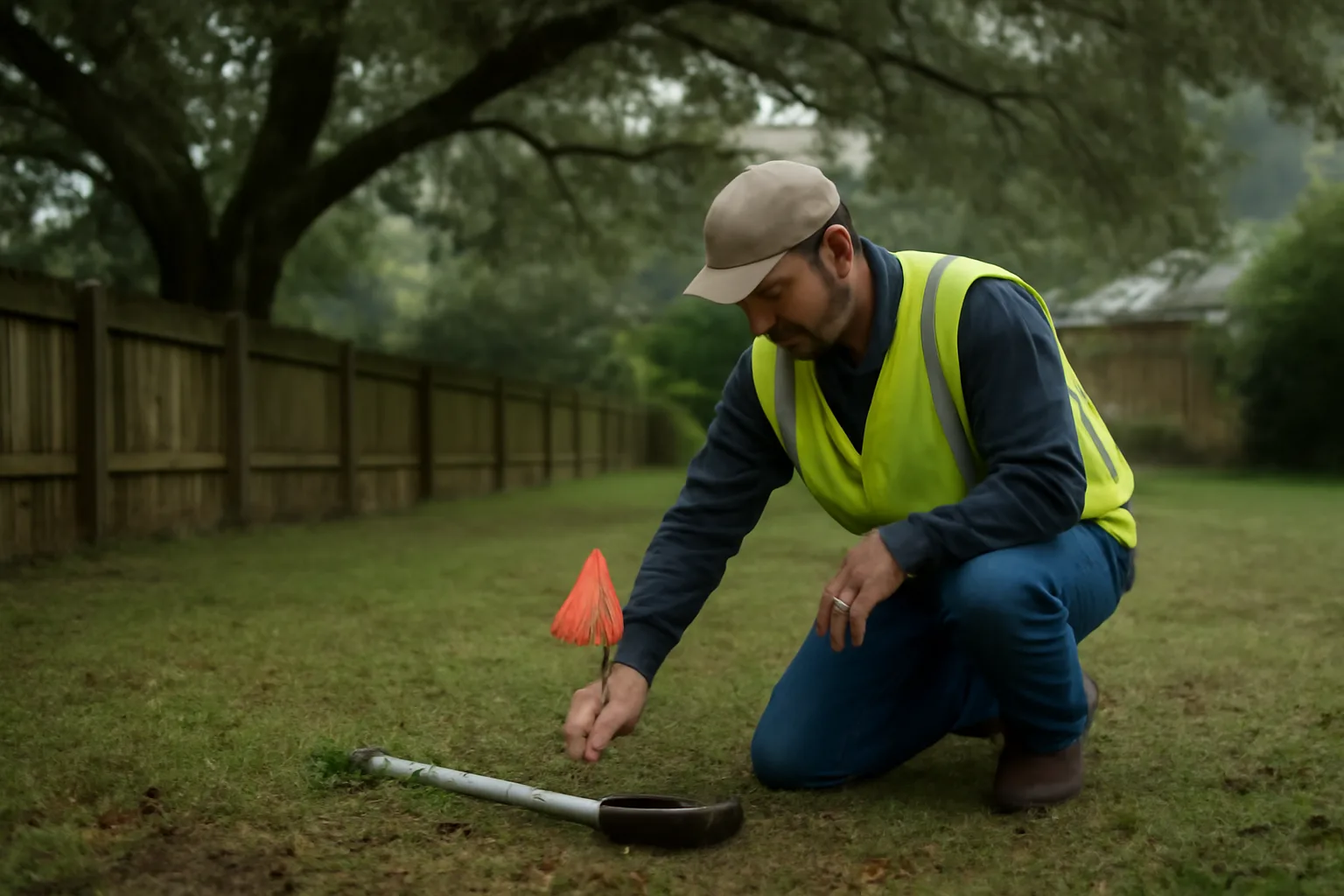
TL;DR
Georgia does not issue a statewide occupational license for utility locators. Public 811 locates are a free call. Hired locators mostly spend first-year cash on boots, PPE, and gas. A private locate shop needs instruments, insurance, and a Georgia business filing. Confirm every fee with the Secretary of State and your city. Training time is set by employers, not a state clock.
Do you need a license for utility locator in Georgia?
No. Georgia does not issue a statewide occupational license titled utility locator. You can get hired to mark public utilities without a locator card from the Secretary of State. Confirm the current license types on the Construction Industry Licensing Board if someone tells you otherwise. [8]
That is the real paper answer. People still mix locating with the Georgia utility contractor credential. Utility contractor licenses sit under the Construction Industry Licensing Board and cover construction of utility systems. They are not a wand-and-paint occupation license. [8]
You still need a driver's license for almost every locating job, because the work is a truck and a ticket list. Open your own shop and you deal with business filings and local occupation tax. Those are not a professional locator license either. File through Georgia eCorp and confirm the current fee in that portal before you pay. [7]
Some employers want a high school diploma and a clean driving record. Some want prior ticket work. None of that is a state locator license.
NULCA runs industry competency programs. Those are private credentials. They are not Georgia law. [12]
If a school sells you a Georgia utility locator license package, walk. Ask them to name the statute. They will not find an occupational locator license in the professional licensing boards.
OSHA still expects underground installations to be located before excavation opens the ground. That duty is why 811 and private locates exist, even without a state locator card. [1]
How much does utility locator cost in Georgia?
If a company hires you, utility locator cost in Georgia is small. If you try to open a private shop on day one, it is large. Public 811 tickets cost the caller nothing. [3]
Hired locators usually get the instrument, truck, and paint from the employer. Your cash outlay is personal gear. Think work boots, a vest you actually wear, and fuel until payroll starts. Do not buy a transmitter and receiver before you have a job offer. That purchase is a common waste.
Independent private locating is a different bill. You are buying electromagnetic locators, maybe GPR later, insurance, a business filing, and a vehicle you can stand to live in. Manufacturer list prices move. Confirm them with the vendor. Confirm the LLC filing amount in eCorp before you submit. [7]
There is no official Georgia tariff for private locates. Anyone quoting a single statewide average is guessing. Collect three written quotes for the same site instead.
BLS does not publish a utility locator wage series for Georgia. The closest published occupations on the Georgia OEWS table are construction laborers and surveying and mapping technicians. Read those tables for current medians. Do not treat them as a locator salary. [6][5][13]
| Cost item | Employed locator | Independent shop | Who confirms |
|---|---|---|---|
| Public 811 ticket | $0 | $0 | Georgia 811, FCC 811 guide |
| State locator license | None | None | GA Construction Industry Licensing Board |
| Business filing | Usually none | SOS filing through eCorp | Georgia eCorp |
| Locate instrument | Company issue | You buy, get a quote | Manufacturer |
| Workers' compensation | Employer policy | Maybe, if you hire | State Board of Workers' Compensation |
Georgia generally pulls employers with three or more employees into workers' compensation. Confirm the current coverage trigger with the State Board of Workers' Compensation before you hire anyone. [11]
How long does utility locator take in Georgia?
There is no state clock for becoming a utility locator in Georgia. Employers set the training length. Some firms put a new hire on ride-alongs in the first week. Working tickets alone with a low miss rate takes months, not a weekend class.
If the question is how long a locate takes in the field, split it in two. The legal wait after you notify 811 is a notice window measured in hours and business days under Georgia's underground facility law, commonly described as a 48 hour wait excluding weekends and holidays. Confirm the current text of O.C.G.A. Title 25, Chapter 9 and Georgia 811's excavator rules before you dig. [9]
Field time on one ticket can be a short stop or a long afternoon. Dense urban plant in Atlanta is slower than a single service lateral in a new subdivision.
Career time is the part people undercount. Budget several months of supervised tickets before you call yourself fast. A two-day vendor class does not replace that.
Private-shop setup time is paperwork plus equipment lead time. eCorp filings can be quick. Insurance quotes are not. Instrument dealers may not have the receiver you want on the shelf. None of those delays is a state locator-license queue, because that license does not exist. [8][7]
What does a Georgia 811 ticket cost?
Nothing to the caller. A public 811 locate request in Georgia is free. You notify Georgia 811. Member facility owners (or their contract locators) mark their buried plants. You do not pay a state invoice for that ticket. [3][9][14]
The FCC consumer guide on 811 is blunt that this is the national one-call number. Use it before you dig. [3]
Free does not mean optional. OSHA's excavation rules still say the estimated location of utility installations shall be determined before you open an excavation. [1]
Facility owners fund the one-call system through membership, not through a fee the homeowner pays at the door. If you work as a locator, you are usually on that owner or contractor side of the ticket. You are not selling the 811 mark to the excavator.
Private lines (irrigation, customer-owned electric, some campus plant) often never get an 811 mark. That gap is where paid private locates live. Do not tell a customer that 811 covered the gas grill line behind the house. It probably did not. [14][9]
How much does private utility locating cost in Georgia?
There is no board-published private locate rate for Georgia. I have not seen a clean public dataset of invoices. Anyone selling you a statewide average is filling space.
Quotes run by the site, not by a mythic hourly. A single-service EM locate on a small lot is one number. A downtown GPR grid under reinforced concrete is another. Ask for a written scope: what frequencies, whether GPR is included, and what happens if the site map is wrong.
Get three quotes. Do not hire the cheapest wand-only bid for a hospital campus.
Selling private locates yourself? Price your drive time. Georgia is a long-state problem. A Macon to Savannah run can erase a cheap ticket.
Compare notes with how neighboring states handle the same split between free 811 and paid private work, including utility locator cost in Alabama and utility locator cost in Florida, because customers will.
Pipeline operators still carry a federal damage-prevention program duty under 49 CFR 192.614. That is not a price list. It is why the public marks exist in the first place. [2][4]
What first-year costs hit if you work for a locating company?
First-year cost is mostly personal when a contract locating firm or a utility hires you in Georgia. The expensive gear stays on the company asset list.
Boots that survive ditches. A vest. Gloves. Maybe a better rain jacket than the one in your closet. Some shops issue PPE. Some do not. Ask before day one.
A phone plan you can live on matters more than people admit. Ticket apps eat data. Do not finance a new truck to take an hourly locate job. That is how people go broke in month three.
Training is usually on the clock or at least scheduled by the employer. You should not need to prepay a state class, because Georgia has no locator license class. [8]
Drug screens and driving records are employer filters. They can cost you a job. They are not a state fee schedule.
BLS still will not show a neat Georgia locator wage. Use the Georgia OEWS table for nearby occupations only as a floor check, then read actual job postings. [6][13]
Take the W-2 job before you buy a receiver. Learn the Georgia 811 ticket language on someone else's paint budget. [9]
What does it cost to start a private locating business in Georgia?
This is where Georgia utility locator cost stops being boots. You are standing up a business that happens to locate, not applying for a locator license that does not exist.
Form the entity through Georgia eCorp if you want an LLC or corporation. Confirm the current filing amount in the portal. Do not trust a blog fee from last year. Annual registration is a separate SOS process. Confirm that too. [7]
Local occupation tax is a city or county bill. Atlanta is not Savannah. Call the city where you actually work.
Insurance is the line that surprises people. General liability quotes vary with your vehicles and whether you hire. Georgia workers' compensation guidance for employers lives at the State Board of Workers' Compensation. Headcount matters. Confirm before you bring on a third person. [11]
Instruments are the other large check. A decent electromagnetic locator is a four-figure to high four-figure purchase depending on the kit. GPR is a much larger check. Confirm list and street prices with dealers. Do not finance GPR to chase residential irrigation tickets.
You do not join Georgia 811 as a freelance wand operator the way a gas utility does. Membership is for facility owners. Read their excavator and membership materials rather than guessing. [9]
If you want a paper checklist of this path, LocatorPath sells a $129 one-time 811 Locator Career Kit at /start. It is a publisher kit. It is not a Georgia license.
What training do Georgia locators actually complete?
Georgia does not require a state locator academy. Training is employer training, plus whatever voluntary industry program you stack on.
Most contract firms teach ticket software, Georgia 811 status codes, paint colors, and how not to mark a guess as a fact. That can be days of ride-alongs, then weeks of watched tickets. [9]
CGA Best Practices are the document serious damage-prevention shops actually keep on the shelf. They are not a Georgia statute. They are the common language between locators and excavators. [10]
NULCA competency work is optional. Some employers like it. The state does not stamp it. [12]
OSHA 10 is common on construction sites. It is not a locate license. Useful, sometimes required by a GC, still not Title 25.
Vendor classes from instrument makers can be worth a day if you already have the job. They are a poor substitute for tickets in DeKalb County clay.
Skip any course that promises a state locator license at the end. That promise is the tell.
Federal pipeline operators still must run a written damage-prevention program under 49 CFR 192.614. Locators working that plant sit inside someone else's program, not a personal state certificate. [2]
What equipment should you buy (and what is a waste)?
Employed? Buy almost nothing beyond PPE until you see what the truck already holds. Companies have opinions about brands. Fighting those opinions with your credit card is a waste.
Independent? Start with an electromagnetic locator and a transmitter you can support in the Southeast. Get a current quote. I will not print a fake list price here, because vendors change kits.
GPR is not a first-year residential tool unless your actual customers pay for it. It is heavy, it is expensive, and it lies in clay. Georgia red clay is not a GPR playground.
Paint, flags, and whiskers are consumables. Buy them as you ticket, not by the pallet on week one.
A laptop for prints and photos is reasonable. A brand-new truck wrap is not. Customers hire marks, not vinyl.
Do not buy a framed license. The board does not sell one for this job. [8]
Compare equipment spend stories with utility locator cost in Arkansas if you work the western border, and with utility locator cost in Illinois if you are mapping a national shop budget. The dirt changes. The temptation to overbuy does not.
How does Georgia law treat locates and wait times?
Georgia's underground facility rules live in O.C.G.A. Title 25, Chapter 9, the Underground Facility Protection Act. Georgia 811 is the one-call center excavators actually use. Read the excavator materials, then confirm the statute text. Do not treat a blog as the Act. [9]
The field rule is simple: notify, wait the legal window, then dig with care around marks. Georgia 811 materials describe a 48 hour style notice period that excludes weekends and holidays. Confirm the current wording before you argue with a contractor on site. [9]
OSHA is still in the hole with you. 29 CFR 1926.651(b)(1) states: "The estimated location of utility installations, such as sewer, telephone, fuel, electric, water lines, or any other underground installations that reasonably may be expected to be encountered during excavation work, shall be determined prior to opening an excavation." [1]
On the pipeline side, 49 CFR 192.614(a) states: "Except as provided in paragraph (d) of this section, each operator of a buried pipeline must carry out, in accordance with this section, a written program to prevent damage to that pipeline from excavation activities." [2]
PHMSA's one-call guidance is the federal overlay on those operator duties. [4]
None of those documents create a Georgia locator occupational license. They create a duty to notify, mark, and not tear the plant out of the ground.
How does Georgia compare with nearby states on locator cost?
Georgia's cost story is the same shape as a lot of Southern states: free public 811, no statewide locator occupation license, and private work priced in the wild. The differences are local tax, dirt, and how fast tickets stack in the metro.
Alabama sits next door with the same basic 811 versus private split. Read utility locator cost in Alabama if you work both sides of the line.
Florida has more GPR chatter because of coastal construction and a different one-call culture. utility locator cost in Florida is the comparison people actually search.
Building a multi-state shop? The license myth follows you. Check utility locator cost in Arizona, utility locator cost in California, and utility locator cost in Connecticut before you assume every state is Georgia with different trees.
utility locator cost in Colorado is a useful mountain-versus-Piedmont contrast on drive time and winter work. Cost is not only the receiver. It is idle days.
CGA Best Practices are the rare document that travels across those borders without pretending to be a license. [10]
What should you confirm with the board before you spend money?
Confirm three things in writing before you write a check. One, the Construction Industry Licensing Board still does not list utility locator as a license type. Two, eCorp's current filing amount for the entity you actually want. Three, your city's occupation tax. [8][7]
Call Georgia 811 education or excavator support if you are unsure whether a facility even belongs in the public ticket. Guessing is how private locates get sold as 811, and the other way around. [9][14]
Workers' compensation is a board question too. The State Board of Workers' Compensation is the stop, not a Facebook group. [11]
No article, including this one, can freeze a fee. LocatorPath is an independent publisher, not a law firm and not a locating company. Use /start only if you want the $129 kit as a checklist. Then verify every number with the agency that cashes the check.
If a vendor guarantees approval, timing, or a Georgia locator card, that is your cue to leave. The honest path is slower and cheaper than the myth.
Frequently asked questions
Do you need a license for utility locator in Georgia?
No statewide occupational license titled utility locator exists. Employers hire locators without a Secretary of State locator card. Do not confuse this with a utility contractor license from the Construction Industry Licensing Board, which is construction work, not locating. Confirm current license types on the board site before you pay a school that claims otherwise.
How much does utility locator cost in Georgia?
If a company hires you, first-year cost is mostly boots, PPE, and commuting. Public 811 tickets are free. Opening a private shop means instruments, insurance, and a Georgia business filing you must confirm in eCorp. There is no official private-locate price list. Get written quotes. Do not buy a receiver before you have paying work.
How long does utility locator take in Georgia?
There is no state training hour requirement. Some firms start ride-alongs in the first week. Working tickets alone well takes months. After you notify 811, wait the legal notice window (commonly described as 48 hours excluding weekends and holidays) and confirm O.C.G.A. Title 25, Chapter 9 plus Georgia 811 rules before you dig.
Is 811 free in Georgia?
Yes. A public 811 request through Georgia 811 does not bill the caller for the ticket. Facility owners fund the one-call system. Private lines that are not in the system still need a paid private locate. The FCC 811 consumer guide treats 811 as the free national number to use before you dig.
Does Georgia license utility contractors for locating?
No. The Construction Industry Licensing Board utility contractor credentials are for constructing utility systems. Locating existing plant is a different job. A utility contractor card is not a locator license, and Georgia does not issue a locator occupation license. Confirm the board's current license list if a bid spec claims otherwise.
Can I locate utilities without a company in Georgia?
You can operate as an independent private locator if you handle business filings, tax, and insurance. You still will not get a state locator license, because none exists. You also will not replace 811 for member-owned public utilities. Independent work is mostly private plant and extra mapping customers pay for on top of 811.
Do I need GPR in the first year?
Usually no. Do not buy GPR until customers are paying for it. Electromagnetic locators cover most standard private and contract tickets. Georgia clay is a hard GPR environment. Employed locators should use the company kit. Independent shops should get current dealer quotes and skip financing a radar unit for irrigation work.
What is the wait time after calling 811 in Georgia?
Georgia 811 and the Underground Facility Protection Act describe a notice window commonly treated as 48 hours excluding weekends and holidays. Confirm the current statute (O.C.G.A. Title 25, Chapter 9) and Georgia 811 excavator rules for the ticket in front of you. Do not dig on the same day you notify and call that lawful.
Are locators required to join Georgia 811?
Individual locators generally do not join as if they were a gas or electric utility. Georgia 811 membership is built around facility owners. Locators work for those members or for contractors. Independent private locators sell work that 811 does not cover. Read Georgia 811 membership and excavator pages rather than filing a random membership.
How much do locate technicians make in Georgia?
BLS does not publish a utility locator series for Georgia. Closest published occupations are construction laborers and surveying and mapping technicians on the Georgia OEWS table and the Occupational Outlook Handbook. Use those as a rough floor, then read current job postings. Nobody has a clean official locator wage dataset for the state.
Do I need workers compensation as a solo locator?
Maybe not on day one, and maybe yes as soon as you hire. Georgia generally brings employers with three or more employees into workers' compensation. Confirm coverage with the State Board of Workers' Compensation for your facts. Do not copy another state's headcount rule. Solo status can change fast when you add a helper.
Is NULCA certification required in Georgia?
No. NULCA programs are voluntary industry credentials. Some employers like them. Georgia law does not replace 811 duties or OSHA excavation rules with a NULCA card. Spend on it if a hiring manager asked. Skip it if you are still trying to get your first ride-along.
Can a homeowner hire a private locator in Georgia?
Yes. Homeowners should still notify 811 for public utilities at no charge, then hire a private locator for lines 811 will not mark, such as some customer-owned electric, irrigation, or yard lighting. Ask what the private locator will not find. A wand visit is not a guarantee that every abandoned pipe will show.
Sources
- OSHA 29 CFR 1926.651 Specific excavation requirements: OSHA requires estimated locations of underground utility installations to be determined before an excavation is opened.
- eCFR 49 CFR 192.614 Damage prevention program: Buried pipeline operators must carry out a written program to prevent excavation damage.
- FCC consumer guide Call 811 Before You Dig: 811 is the national one-call number the public uses before digging, and the call is treated as a free 811 service.
- PHMSA one-call notification / excavator practice: Federal pipeline safety practice directs excavation damage prevention through one-call notification systems.
- BLS Occupational Outlook Handbook, Surveying and Mapping Technicians: BLS publishes wages for surveying and mapping technicians, a nearby occupation, not a utility locator series.
- BLS OEWS occupational employment and wage estimates, Georgia: BLS publishes Georgia wage estimates by occupation and does not include a dedicated utility locator occupation.
- Georgia Secretary of State how-to guide, form a limited liability company: Georgia LLCs are formed through the Secretary of State process (eCorp); filers must confirm the current fee before paying.
- Georgia Secretary of State, State Board of Construction Industry Licensing: Georgia's construction licensing board issues construction and utility contractor style credentials, not a utility locator occupation license.
- Common Ground Alliance Best Practices: CGA Best Practices are the voluntary national damage-prevention practices locating shops use, not a Georgia locator license.
- NULCA (National Utility Locating Contractors Association): NULCA offers industry locator competency programs that are not a Georgia state license.
- BLS Occupational Outlook Handbook, Construction Laborers and Helpers: BLS tracks construction laborers as a published occupation with handbook wage data, separate from utility locator.