Last updated 2026-08-18
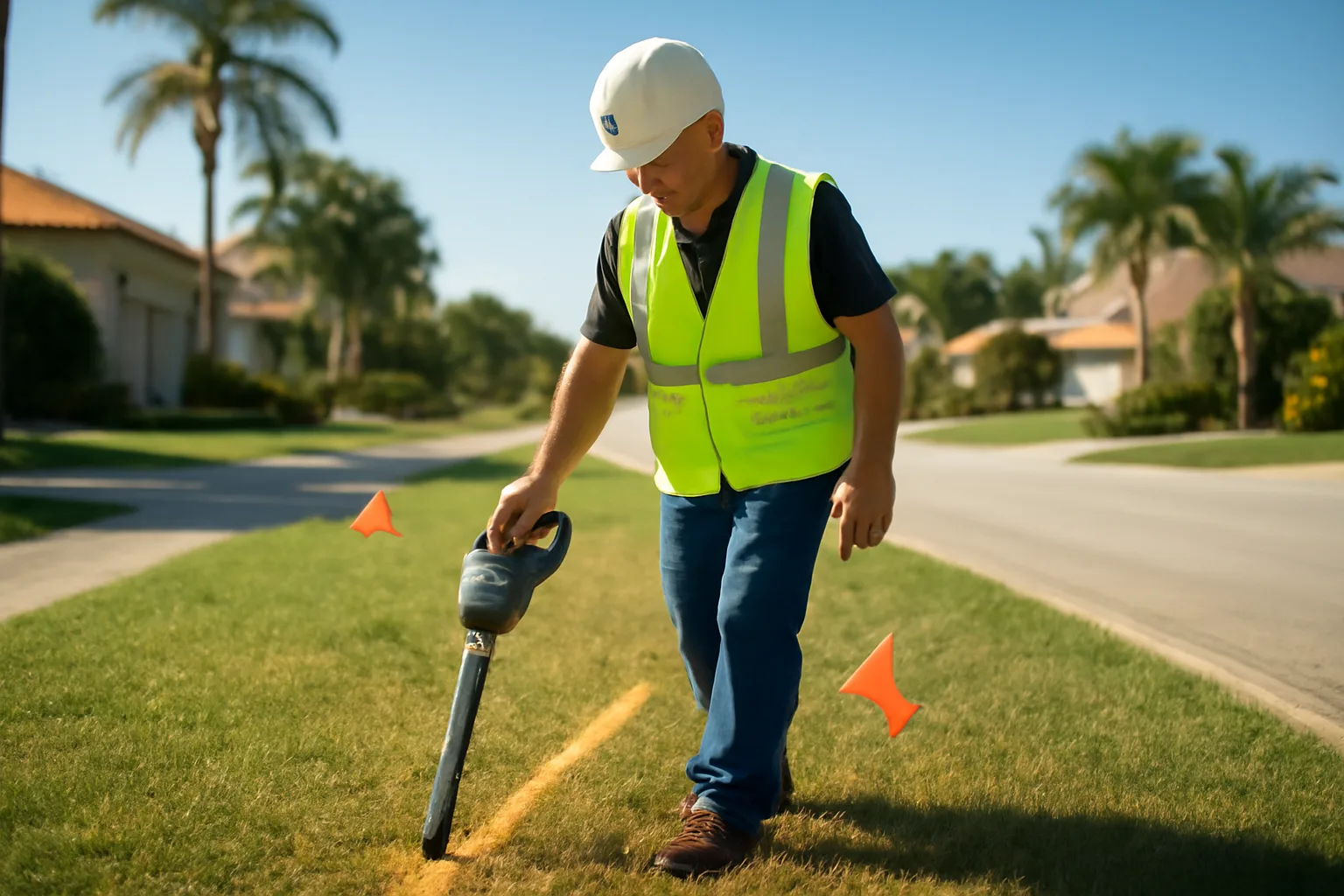
TL;DR
Florida issues no utility locator license. You register your business with Sunbiz (LLC fee $125), pull a local business tax receipt, and follow Chapter 556, F.S. for 811 marking rules. Budget $5,000 to $15,000 for gear, training, and insurance. You can be legal and taking your first paid ticket in about a month.
Do you need a license for utility locator in Florida?
No, you don't. Florida issues no specific utility locator license for individuals or businesses. The Underground Facility Damage Prevention and Safety Act (Chapter 556, Florida Statutes) governs how locating gets done, not who qualifies to do it. You can start a locating service without sitting a state exam or paying a licensing board fee.
No license doesn't mean no rules. The Florida Department of Agriculture and Consumer Services (FDACS) enforces the damage prevention law [1], and utility companies require locators working on their behalf to be approved contractors or certified through internal programs. Hit a line, and FDACS can fine you. You run a real business, and you follow the same one-call and marking standards as any utility employee.
One exception matters. If your locating business also digs (potholing to visually confirm a utility, for example), you may need a contractor license from the Department of Business and Professional Regulation under Chapter 489, F.S. For locating alone, running an electromagnetic device, painting lines, and setting flags, you skip that paperwork entirely.
What does Florida law say about utility locating?
Two state authorities matter most: the one-call center Sunshine State One Call (dial 811) and FDACS, which enforces the Underground Facility Damage Prevention and Safety Act [1]. Chapter 556, F.S. requires anyone excavating to notify the one-call center at least two full business days before digging. The utility owner then locates and marks its underground lines. If you're the locator hired by the utility owner, or working as a private locator, you own the marking inside the tolerance zone.
Florida Statute 556.102(9) defines the tolerance zone as "24 inches from the exterior surface of the underground facility" [3]. Miss that zone, and civil penalties follow. FDACS has issued fines up to $2,500 per violation [1]. The statute also adopts the APWA color code: red for electric, yellow for gas and oil, orange for communications, blue for water, green for sewer, and white for proposed excavation [9]. Mark the wrong color and you invite a miscommunication and a damage claim.
Sunshine State One Call runs the ticket system and handles locate requests [11]. The call center is the single point of contact. Individual utilities or their private locators then do the actual marking. Its database also defines which members (utilities) must respond for any given address. As a locator, you never call 811 to mark your own private facility unless you are the utility owner requesting marking on a public excavation.
What business registration and local permits do you need?
First official step: form your business entity. The Florida Division of Corporations (Sunbiz) processes online LLC filings for a $125 fee [4]. You also need a registered agent with a Florida street address. Annual report fees ($138.75) come due each year to keep the business active. Sole proprietors can skip LLC formation but still need a local business tax receipt.
Most Florida cities and counties require a business tax receipt (once called an occupational license) before you operate. Fees run $25 to $100. In Miami-Dade County, you apply for a local business tax receipt and pay a fee tied to your business classification [5]. Operate without one and you risk a stop-work order. Check with your city or county tax collector's office.
If your locating stays aboveground (painting, flagging, marking), you don't need a building department permit to access public rights-of-way. Open an excavation for any reason, even a small test hole, and you enter DBPR contractor licensing (Chapter 489), which means holding a certified or registered contractor license for excavation. Stick to locating only, and that whole requirement disappears.
How much does utility locator cost in Florida?
Startup costs run $5,000 to $15,000, depending on whether you buy new equipment and a dedicated vehicle. Most new one-person operations land near $8,000 to $10,000. Here's a realistic breakdown:
| Expense | Typical Cost | Notes |
|---|---|---|
| Business registration (LLC) | $125 | Sunbiz filing fee [4] |
| Local business tax receipt | $25, $100 | Varies by county [5] |
| EM utility locator (new) | $3,595 | Example: Radiodetection RD8200G [6] |
| Basic training course | $795 | Commercial provider fee (ex: Penn State workshop) [7] |
| General liability insurance (1 yr) | $372+ | Next Insurance starting rate [8] |
| Used cargo van or truck | $3,000, $6,000 | One-time purchase |
| Supplies (paint, flags, PPE) | $300, $500 | Recurring |
Here's where you save real money. A refurbished locator from a trusted dealer cuts the device cost to $1,500 to $2,500. Training drops to near zero through on-the-job mentorship with a utility company, but only if you get hired as an employee first. Treat the table numbers as one example. Actual costs move with your choices.
How long does utility locator take in Florida?
From the day you decide to start to the day you take your first paid locate ticket, plan on four to six weeks. Here's the typical timeline:
- Business registration: 1 to 5 business days. Sunbiz processes most online LLC filings within 24 hours, and the IRS issues your EIN instantly.
- Local business tax receipt: same day to two weeks, depending on the county. Most allow walk-in issuance.
- Equipment procurement: immediate if you have cash. Financing a new locator adds about a week for shipping.
- Insurance: instant quotes, and coverage can begin the same day you pay your premium, often online.
- Training: a one-week intensive workshop covers the basics [7]. Go the employer-track route, and 2 to 4 weeks of field training is standard before you work solo.
Skip the formal training, get hired by a locating contractor first, and your timeline shrinks to however long their on-the-job sign-off takes. For a self-employed startup, count on about a month to get the paperwork, tools, and foundational knowledge in place.
What training and certification do utility locators need in Florida?
Florida mandates no certification, but nobody hires a locator who can't prove they read the marks and run the gear. The most recognized program is the National Utility Locating Contractors Association (NULCA) locator certification, which covers marking codes, equipment operation, and state laws. You sit NULCA's online exam after a training course or enough field experience.
Want a lower-cost, self-paced path? The LocatorPath 811 Locator Career Kit ($129) walks you through the exact paper rules you face in Florida: the statute, the color codes, how 811 tickets work, and what FDACS looks for during enforcement. It's light on hands-on equipment training, but it builds legal and procedural fluency fast.
Manufacturer-led training from Radiodetection, Vivax-Metrotech, or Subsite gives hands-on practice. A two-day course runs $500 to $1,000 depending on the vendor. Some Florida community colleges offer a utility line safety course through continuing education, though availability shifts. Check with Florida Gateway College or a similar technical school.
What equipment do you need to start locating in Florida?
You cannot locate without an electromagnetic (EM) utility line locator. Expect to spend $1,500 to $8,000 depending on new, used, or multi-frequency capability. The Radiodetection RD8200 ($3,595 new) is a common entry-level pick [6]. Add a GPR (ground penetrating radar) only if you expect frequent private-locate work on non-metallic utilities. An entry-level GPR push cart adds $10,000 to $15,000, and you don't need it at launch.
Beyond the locator, you need marking paint (inverted cans in all APWA colors), marking flags, a hard hat, a safety vest, steel-toed boots, a tape measure, and a vehicle to haul it. A used cargo van or pickup works fine. Don't forget a smartphone with a data plan to receive locate tickets from 811 or private clients. Many 811 centers deliver tickets by web portal or app.
What insurance and liability coverage do Florida locators need?
One undetected line can cost tens of thousands in repairs. Florida's damage prevention law lets FDACS levy fines up to $2,500 per violation, but the bigger threat is a civil lawsuit from the utility owner or property owner [1]. Commercial general liability (GL) insurance is your minimum defense.
A GL policy for a one-person locating business starts around $31 a month ($372 a year) according to Next Insurance's publicly posted estimates [8]. That policy typically covers bodily injury and property damage. For added protection, errors and omissions (E&O) coverage, often called professional liability, pays when your locate error causes damage that a GL policy excludes. E&O adds $400 to $800 a year for a small firm.
Many utility companies won't add you to their approved contractor list unless you carry at least $1 million in GL coverage. Ask your insurance agent for a certificate of insurance with the utility named as an additional insured.
How do you get work as a utility locator in Florida?
Two main paths. First, subcontract through a large locating firm like USIC, Stake Center Locating, or Utiliquest that holds the master service agreements with utilities. They handle the 811 tickets and pay you per locate or hourly. Fastest route to steady work, but you take their training and quality audits along with it.
Second, go fully direct to private clients. Private locating serves homeowners, excavators, and developers who need lines marked beyond the 811 point, like a sewer lateral from the house to the street or a propane line on private property. Build your client list through local excavator associations, property management companies, and word of mouth. You won't get 811 tickets routed to you automatically unless you're registered with the utility or the one-call center as a contractor responding for a specific member.
Start a relationship with Sunshine State One Call by attending their stakeholder meetings [11]. Learning who currently does the work, and where capacity runs thin, tells you where to aim.
What are the utility locator rules in nearby states?
Take jobs across the Florida-Alabama line and the rules shift. Alabama issues no separate state locator license either, but its registration and notification rules differ. Check our full guide on how to start a utility locator business in Alabama and the Alabama license details before you cross. For a different regulatory flavor, Arizona's locator license guide shows a state with more formal paperwork. California's startup walkthrough covers its Cal-OSHA requirements. Head north and Colorado's locator rules include a mandatory notification system for all excavations. Knowing how a neighbor handles things keeps a fine off your books.
What common mistakes do new locators make in Florida?
Skipping the business tax receipt. Plenty of new operators assume the LLC alone is enough, then get fined by the county.
Not setting up insurance before the first job. A single broken fiber line can cost $10,000. With no certificate of insurance, the utility may sue you personally.
Using the wrong paint color. FDACS inspectors check color code compliance under Florida Administrative Code Rule 5J-20.003 [9]. Red paint on a gas line is a serious violation.
Working both sides of the 811 process. If you're the excavator and the locator on the same project, confirm you have no conflict and that you notified 811 in the excavator role.
Buying the cheapest EM locator without understanding frequency needs. Florida's sandy, wet soil and saltwater-adjacent ground can corrupt low-frequency signals. A multi-frequency unit running 33 kHz and higher avoids false voids.
Frequently asked questions
Do you need a license for utility locator in Florida?
No. Florida offers no state-issued utility locator license. You comply with Chapter 556, F.S., register your business with Sunbiz, and get a local business tax receipt. Utility companies may require you to be an approved contractor, but the state doesn't test or license locators.
How much does utility locator cost in Florida?
A one-person startup typically costs $5,000 to $15,000. The biggest expenses are an EM locator (new around $3,595), a used vehicle ($3,000-$6,000), training ($500-$2,000), general liability insurance (starting $372 a year), and local business registration fees ($125+). Buying a refurbished locator and using employer training drops costs toward the low end.
How long does utility locator take in Florida?
From zero to your first paid locate ticket, budget four to six weeks. Business registration and local permits take a few days. Equipment arrives within a week if bought outright. A hands-on training course runs one week, on-the-job apprenticeships take 2-4 weeks. Insurance can activate the same day you apply.
Does FDACS require a locator certification?
No. The Florida Department of Agriculture and Consumer Services enforces the damage prevention law but does not issue or require a locator certification. Many employers and clients still expect proof of training, such as NULCA certification or manufacturer credentials.
Can I do private locating without calling 811?
Yes, if the work stays entirely on private property and you aren't excavating. If any excavation will occur, by you or a client, Florida law requires 811 notification first. As the locator, you still mark any utilities within the tolerance zone to the same APWA color code standard.
What are the marking color codes in Florida?
Florida adopts the APWA Uniform Color Code. Red: electric. Yellow: gas, oil, steam. Orange: communications and cable TV. Blue: potable water. Purple: reclaimed water. Green: sewer. White: proposed excavation. Florida Administrative Code Rule 5J-20.003 makes these mandatory [9].
Do I need a DOT permit to mark on state highways?
No separate permit is required just for marking paint or flags in the right-of-way. If you need to set up traffic control or close a lane for safety, you follow FDOT's Maintenance of Traffic (MOT) standards and may need a lane-closure permit depending on the road classification.
How much can a utility locator earn in Florida?
Entry-level locators working for a firm earn $18 to $22 an hour. Independent locators billing directly often charge $75 to $150 per locate job, which leads to annual gross revenues between $50,000 and $90,000 for a full-time solo operator, depending on market density and repeat clients.
Is a Florida business tax receipt the same as a license?
In practice, yes. It's the local government's permission to operate. Many counties still call it an occupational license, though the official term is now business tax receipt. You display it at your principal place of business and renew it annually.
What insurance do Florida utility locators need?
At minimum, general liability (GL) coverage starting around $372 a year. Errors and omissions (E&O) insurance, which covers professional mistakes like a missed line, adds $400 to $800 a year. Utilities and contracting firms typically require $1 million in GL before they add you to their approved vendor list.
Do underground utilities own the marking paint once I put it down?
No. The paint and flags are temporary indicators for the excavator. They stay the responsibility of the locator. Florida's tolerance zone rule protects the line regardless of the paint. Mis-mark beyond 24 inches and liability shifts to you.
Can I start a utility locating business from home in Florida?
Yes. Many one-person locating businesses run from a home office. You still need a local business tax receipt listing your home address as the principal place of business. Check your county's zoning for home-based businesses. Most permit no-impact home occupations.
Sources
- FL Dept. of Agriculture and Consumer Services, Underground Damage Prevention: FDACS enforces the Underground Facility Damage Prevention and Safety Act and can issue fines up to $2,500 per violation.
- Florida Statute 556.105: The Department of Agriculture and Consumer Services has enforcement authority for Chapter 556.
- Florida Statute 556.102(9): Tolerance zone defined as 24 inches from the exterior surface of the underground facility.
- Sunbiz, Florida LLC Filing Fees: Florida LLC filing fee is $125.
- Grainger Product Page: Radiodetection RD8200G Utility Locator: New Radiodetection RD8200G EM locator sold for $3,595.
- Penn State Extension, Utility Line Locating Workshop: Training workshop cost $795.
- U.S. Small Business Administration, Get Business Insurance: General liability insurance protects small businesses against property damage and liability claims.
- Florida Administrative Code Rule 5J-20.003: The rule adopts the APWA Uniform Color Code for marking underground utilities.
- Florida Statute 556.115: Sunshine State One Call is the statewide notification center for excavation.
- Sunshine State One Call of Florida: The center provides contractor lists and member utility information.