Last updated 2026-08-18
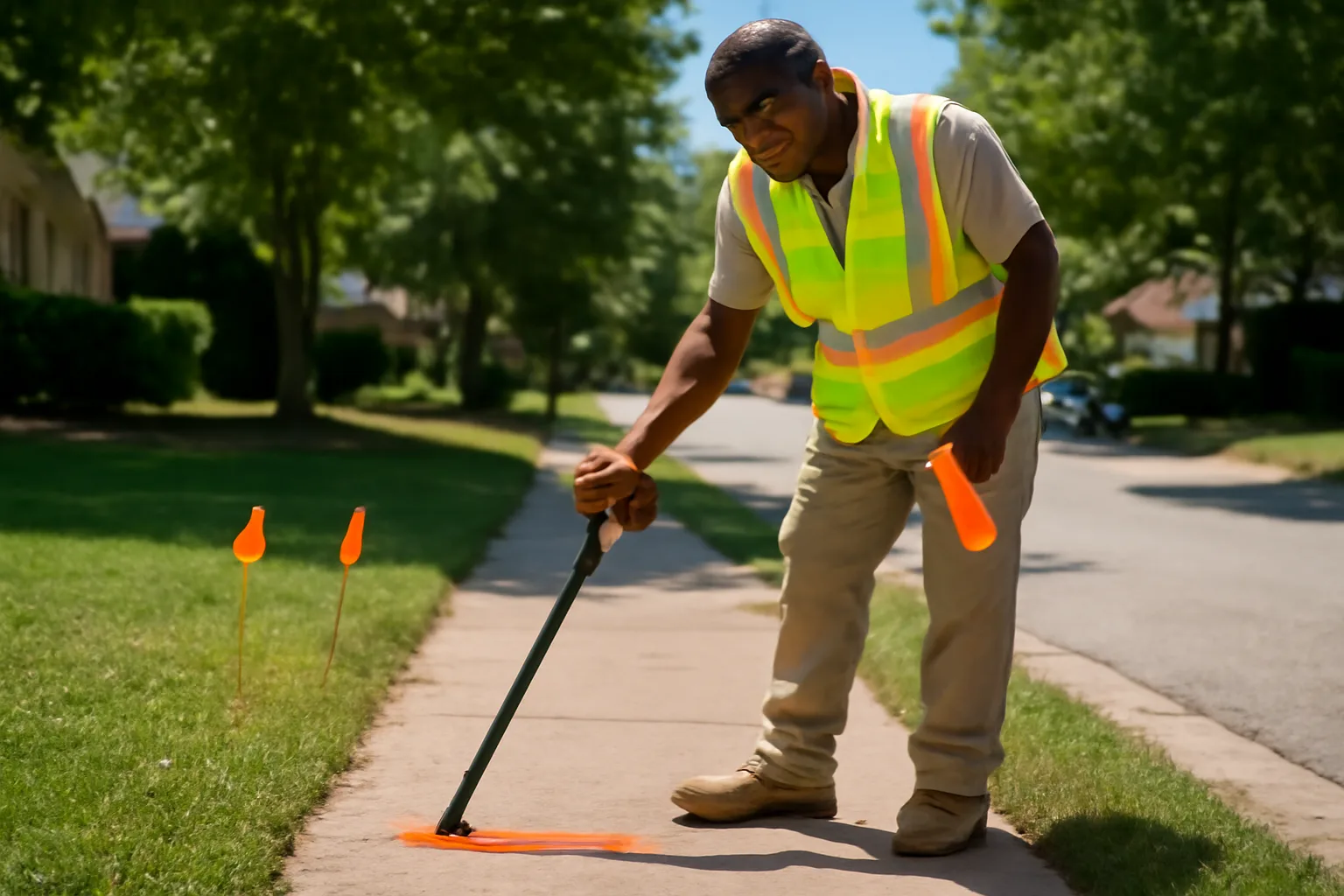
TL;DR
To work as a for-hire utility locator in Georgia, you must complete the Georgia 811 Locator Qualification Program (LQP), an online training and proctored exam with a $75 fee. There is no state-issued license, but the LQP certificate is required under O.C.G.A. § 25-9-6.1. Startup costs range from $3,000 to $15,000, and you can be legal in 4 to 8 weeks.
What is the utility locating license or certification required in Georgia?
Georgia does not issue a state license for utility locators. Instead, the law (the Georgia Utility Facility Protection Act) mandates a qualification certificate. You cannot perform utility locating for compensation without completing an approved training program and passing an exam [1]. The Georgia 811 Locator Qualification Program (LQP) is that legal path. The official language from the statute is straightforward: "No person shall perform utility locating services for compensation unless the person has completed an approved training program and passed an examination administered by the training program or by an entity designated by the training program" [1]. The Georgia Utility Protection Center, Inc., the entity that runs Georgia 811, is the designated administrator [2].
That means if you plan to locate as an independent contractor, a subcontractor for utility companies, or your own locating firm, you need that LQP card. If you work directly for a utility owner (like Georgia Power), your employer's internal training program may qualify, but even then, many in-house locators still get the LQP. For anyone entering the field on their own, the LQP is a hard requirement, not a suggestion.
The key point: you are not getting a license from a licensing board. You are obtaining a mandated qualification certificate that proves you understand the law, the marking standards, and safety practices. Without it, you're noncompliant and could face fines or lose contracts.
How do I complete the Georgia 811 Locator Qualification Program (LQP)?
The Georgia 811 LQP is an online, self-paced curriculum that covers the Georgia Utility Facility Protection Act, color codes, tolerance zones, damage prevention, incident reporting, and documentation. It takes most people 8 to 16 hours to finish all modules [2]. After completing the coursework, you schedule a proctored final exam at a designated testing site (usually a Georgia 811 location or approved proctoring center).
The exam is not impossibly hard, but you need to study. The material is practical, and the test focuses on real-world scenario questions about marking rules, One-Call Center procedures, and state law. Once you pass, you get a physical LQP wallet card valid for three years.
The current fee, as of 2025, is $75 per person for the initial qualification, course, exam, and card included [2]. Georgia 811 sometimes adjusts fees, so always confirm at georgia811.com before enrolling. You can register online, pay, and start immediately. There's no application backlog or waiting period; the pace depends on how fast you get through the modules and schedule your exam.
What about re-qualifying? Every three years you'll need to renew. The renewal fee is lower (typically $50), and you complete a shorter refresher rather than the full course [2]. Missing renewal means your certification lapses and you technically cannot locate until it's current. Nobody checks daily, but utility owners that hire you will ask for a valid card.
How much does it cost to become a utility locator in Georgia?
Startup costs fall into three buckets: mandatory qualification, business formation, and equipment. Here's a realistic breakdown based on Georgia-specific figures and typical market prices:
| Cost Item | Low End | High End | Notes |
|---|---|---|---|
| Georgia 811 LQP (initial) | $75 | $75 | One-time, required by law [2] |
| Georgia LLC filing (online) | $100 | $110 | One-time; optional but recommended for personal liability protection [3] |
| Georgia LLC annual registration | $50 | $50 | Due each year by April 1 [3] |
| General liability insurance (annual) | $500 | $2,000 | $1M coverage, can vary wildly by provider and location; often $800-$1,200 for a new start |
| Workers' comp (if you have employees) | $2,000 | $5,000 | Per employee; not required for solo locators in GA |
| Utility locator equipment (used or mid-range) | $3,000 | $8,000 | A reliable electromagnetic locator like a used RD8100 or vLoc3-Pro; plus transmitter |
| Paint, flags, consumables (starting) | $150 | $400 | Bulk purchase of marking paint and flags |
| Safety gear (vest, boots, cones) | $100 | $250 | High-vis Class 2 vest, steel-toe boots, hard hat |
| Vehicle (if you don't already have one) | $5,000 | $15,000 | Used truck or cargo van; many new locators start with their personal vehicle |
All in, if you already own a suitable vehicle, you can get started for $3,500 to $10,750 on the low end and up to $25,000 on the high end if you buy a new truck and premium gear. The most common launch budget we see from locators in Georgia is $5,000 to $8,000, that gets you a solid used locator, insurance for the year, your LLC, and the LQP.
Don't forget ongoing costs: insurance renews annually, paint and flags are recurring, vehicle fuel and maintenance add up. Many new locators underestimate the cost of tires, brakes, and driving 100-200 miles a day. If you operate a solo business, plan on at least $800 to $1,500 monthly for all operating expenses before you pay yourself a cent.
What is the timeline to start locating legally in Georgia?
From zero to certified and ready to take tickets, expect four to eight weeks. Here's the real timeline, based on talking to new Georgia locators and the published process:
- LQP online course: 8 to 16 hours, usually spread over a week or two if you're working a day job.
- Scheduling and taking the proctored exam: add one to two weeks after finishing the course, depending on test center availability.
- Getting your LQP card: mailed or issued quickly after passing; figure a few days.
- Business formation: filing an LLC online with the Georgia Secretary of State processes in about 7 to 10 business days for regular filing, or 2 business days for an extra $100 expedited fee [3]. An EIN from the IRS is instant online.
- Insurance: most agents can bind a general liability policy within 48 hours of application.
- Equipment: if you order a used locator, it may take a week or two to arrive. Consumables are off-the-shelf.
Aggressive timeline: if you register for the LQP today, study evenings and weekends, schedule the exam at the earliest slot, file your LLC the same week, and order your locator, you could be legal in four weeks. Realistic timeline for someone also working a job: six to eight weeks. The slowest part tends to be the exam wait, but many test centers have openings quickly if you are flexible.
How do I set up a business for utility locating in Georgia?
The simplest structure for a solo utility locator is a single-member LLC. It costs $100 to file online with the Georgia Secretary of State (add $10 for paper filing) [3]. This separates your personal assets from business liability, something you'll want when you're potentially dealing with utility strikes. After forming the LLC, you'll file an annual registration that costs $50 by April 1 each year [3]. Miss that and the state can administratively dissolve the LLC.
You'll also need a federal Employer Identification Number (EIN) from the IRS, which is free and takes ten minutes online. Even if you never hire employees, having an EIN lets you open a business bank account and keeps your Social Security number off client paperwork.
Local business licenses are a gray area. Georgia does not have a uniform statewide contractor license for utility locating. However, some cities (Atlanta, Savannah, Augusta) require a general business license or occupational tax certificate. Check with the county or city clerk where you'll base operations. If you only do work in unincorporated areas or on right-of-way outside city limits, you often don't need a local license, but it's worth a ten-minute phone call to confirm.
What insurance do I need for utility locating in Georgia?
General liability is non-negotiable for utility locators. Utility owners and 811 centers will almost always require at least $1 million in coverage per occurrence before they'll let you onto their tickets. You'll also want a $2 million aggregate. Expect to pay between $500 and $2,000 per year for a first-year locator policy, with $1,200 being typical. Rates depend on your location, experience, and whether you add contamination or errors & omissions coverage.
Workers' compensation insurance is required in Georgia if you have three or more full-time or part-time employees. A solo locator with no employees is exempt. If you bring on a helper, you'll immediately need workers' comp, which can cost $2,000 to $5,000 annually per employee for this risk class. That's a factor you can't ignore in your pricing.
Some contractors also buy commercial auto insurance, because personal auto policies usually exclude business use that involves hauling equipment and driving from site to site. A basic commercial auto policy runs $1,200 to $2,400 per vehicle annually. Many new locators skip this initially and hope their personal insurer doesn't find out, but that's a gamble.
What equipment do I need to start utility locating in Georgia?
A good electromagnetic locator is your biggest single expense. You do not need a brand new $12,000 system. A used Radiodetection RD8100 or Vivax-Metrotech vLoc3-Pro in good condition runs $3,500 to $6,000 and will last years with calibration. Calibration itself costs $200-$400 annually. Buy a transmitter that can induce a signal onto a target pipe (the standard 8 kHz and 33 kHz frequencies cover most jobs).
For marking, you'll need one-case quantities of upside-down marking paint in the standard APWA colors (red, yellow, orange, blue, green, white). A case of 12 cans goes for about $40. Marking flags cost $20-$40 per bundle of 100. Start with a few bundles of each color. You'll also need a good clipboard or tablet for documentation.
What you can skip early: ground-penetrating radar (GPR) is overkill for basic locate work unless you're finding non-conductive pipes, and a single GPR unit costs $15,000-$30,000. A simple pin-finder for metal risers and valve boxes is useful and under $200. A smart phone with a hotspot for filing tickets and photos in the field is essential. If you need structured guidance on what to buy in one box, the $129 811 Locator Career Kit from LocatorPath includes a gear checklist and documentation templates, though your LQP training covers the fundamentals.
How do I register with Georgia 811 to get locate tickets?
To receive excavation tickets, you must register with Georgia 811 as a locating contractor [4]. You'll submit an application, provide your LQP card number, your insurance certificate, and your business information. Once approved, Georgia 811 can assign you tickets when facility owners need a third-party locator. The agreement typically requires you to meet certain response times (the standard is two full working days after the ticket is issued, called the "48-hour rule" in practice).
A separate path is to contract directly with utility owners, telecoms, gas companies, power utilities, who then add you to their list of approved locators with Georgia 811. Those tickets flow to you through the utility's internal system or the 811 portal. Many new locators start by subcontracting under an established locating firm that already has the utility contracts. You'll work as a 1099 contractor, using your own equipment and insurance, and using their ticket volume.
Either way, you need to be registered. And once you start marking lines, every ticket must be closed out in the Georgia 811 system, with documentation of what was marked, what was not, and any issues. This isn't optional, state rule 515-9-4 sets the requirements.
How do I find utility locating work in Georgia?
The most reliable route for a new Georgia locator is subcontracting for a larger locating company that already holds utility damage-prevention contracts with telecoms or gas providers. These companies often need overflow help during peak season (spring and summer). You'll get paid per ticket or per mile, and they'll feed you the work. It's a high-volume, low-margin way to start, but it builds your reputation and fills your calendar.
Another angle: reach out directly to smaller rural electric co-ops and municipal gas departments. Many don't have enough in-house locators and are open to solo contractors. You'll need to network at industry events like the Georgia 811 Damage Prevention Summit or through the Georgia Utility Coordinating Council. Cold calling and visiting offices in person still works in this industry.
A third niche is private locates for homeowners, excavators, and contractors doing work beyond the public right-of-way. Those jobs pay more per locate (often $100-$300 per site) but are inconsistent. You'll need a website, Google Business Profile, and maybe some Facebook ads. Don't expect full-time income from private locates in year one; treat them as a supplement while you build utility contracts.
What are the maintenance and renewal requirements for Georgia LQP certification?
Your initial LQP card is valid for three years. Georgia 811 sends a renewal notice, but it's on you to track the expiration date. The renewal process typically involves a shorter online refresher course covering any statutory or procedural updates and a renewal fee (approximately $50 as of current guidance) [2]. You do not retake the full initial exam every cycle. If you let it lapse for more than a few months, you might have to start over with the full program and the full fee.
Utility contractors and facility owners check your card regularly, especially at the start of a contract. If you're caught locating with an expired card, the facility owner can be fined, and you'll likely lose that contract. Set a calendar reminder, pay the renewal, and keep a photo of your new card on your phone in case anyone asks on a job site.
What are common mistakes new Georgia locators make?
1. Skipping liability insurance: some brand-new locators try to take tickets without coverage because "nobody asked." Georgia 811 will ask. Utility owners will ask. And if you strike a gas line and cause damage without insurance, you can be personally on the hook for hundreds of thousands of dollars. A $1M policy is cheap compared to that risk.
2. Not registering correctly with Georgia 811: setting up your LLC is only half the battle. If you aren't an approved locator in the 811 system, you won't get tickets and you'll waste weeks wondering why.
3. Underpricing: many first-timers accept per-ticket rates that don't cover their real cost per mile. Figure your vehicle expense, insurance, amortized equipment, and your time carefully. A 15-minute locate that requires a 60-mile round trip isn't a $30 ticket; it's a losing proposition. Charge enough to survive year one.
4. Ignoring the paint color and documentation standards: Georgia law specifies exactly which utilities get which color, and how to document marks. An incorrect or sloppy mark can shift liability to you if there's a strike.
5. Thinking the LQP is a one-and-done training: it's a legal qualification, not a substitute for field experience. The first time you're trying to locate an old cast-iron pipe with weak tracer wire, you'll be glad you spent time shadowing an experienced locator. Combine your LQP knowledge with real-world practice.
How does Georgia compare to surrounding states for utility locating requirements?
If you're comparing requirements across other states, Georgia's process is simpler than some and more structured than others. For instance, starting in Alabama has different insurance and registration layers, while the utility locator license details in Alabama show the contrast with Georgia's qualification-based system. Up north, starting in Alaska and its license specifics are different again. And in the Southwest, Arizona's approach involves contractor licensing that Georgia doesn't require. Wherever you go, the core skill set translates, but the paper requirements don't.
In Georgia, once you have your LQP, your LLC, your insurance, and your 811 registration, you're ready to take that first ticket. It's a straightforward path if you follow the steps in order. If you want a downloadable checklist of this whole process, you can find it and other state-specific toolkits on LocatorPath.
Frequently asked questions
Do you need a license for utility locator in Georgia?
Yes, in the form of a mandatory qualification. Georgia law requires anyone performing utility locating for compensation to complete the Georgia 811 Locator Qualification Program (LQP), which includes an online course and proctored exam. There's no traditional board-issued license, but the LQP card is your legal credential. The fee is $75.
How much does utility locator cost in Georgia?
Mandatory LQP costs $75. Business registration (LLC) costs $100-$110 one-time plus $50 annual. Equipment, insurance, and consumables bring total startup to $3,000-$15,000 depending on vehicle and locator choices. Most new locators spend $5,000-$8,000 to start.
How long does utility locator take in Georgia?
Four to eight weeks from start to legal readiness. The LQP online course takes 8-16 hours, exam scheduling adds 1-2 weeks, LLC filing processes in about 7-10 business days, and insurance can be bound in 48 hours. Someone working a day job can expect six weeks.
Can I locate utilities in Georgia without the LQP if I work for a utility company?
If you are a direct employee of a utility facility owner (like a power or gas company) and that company has an internal training program that meets the statute's requirements, you may not need the standalone LQP. But most facility owners still require it or send employees through it as a best practice. If you're an independent contractor, the LQP is mandatory.
Is the Georgia 811 LQP exam hard?
The exam is designed to test practical knowledge of Georgia's dig law, marking standards, and safety procedures. It is not unreasonably difficult if you study the online material thoroughly. Most people who complete the full course pass on the first attempt.
What equipment do I need to start locating in Georgia?
A reliable electromagnetic locator and transmitter ($3,500-$6,000 used), marking paint in APWA colors, marking flags, high-visibility safety gear, and a smartphone or tablet for ticket documentation. You can often wait on a dedicated work vehicle if your personal vehicle is suitable.
Do I need a contractor's license for utility locating in Georgia?
No. Georgia does not have a statewide contractor license specifically for utility locating. The LQP qualification is the primary regulatory requirement. Some cities may require a local business license, but there is no separate locating contractor board.
How do I get locate tickets from Georgia 811?
You must register as a locating contractor with Georgia 811 by submitting your LQP information, proof of insurance, and business details. Once approved, you can be assigned tickets from facility owners or work as a subcontractor for firms that hold direct contracts.
Do I need general liability insurance in Georgia?
It is not a state statutory mandate for locators, but it is universally required by utility owners, the 811 center, and nearly every contract. A $1 million per occurrence, $2 million aggregate general liability policy is the standard minimum. Expect to pay $500-$2,000 annually.
How much can a new utility locator earn in Georgia?
Full-time independent locators in Georgia can gross $45,000 to $75,000 in their first year depending on ticket volume and contracts. Subcontracting pay often ranges from $15 to $25 per ticket, with higher rates for complex locates. Private locates can pay $100-$300 per job but are harder to line up consistently.
Does Georgia require locator certification renewal?
Yes. The Georgia 811 LQP certification expires every three years. Renewal requires an abbreviated refresher and a fee of approximately $50. Allowing your certification to lapse means you legally cannot perform for-hire locating until you renew.
Can I start a utility locating business without a commercial driver's license (CDL)?
Yes. Most utility locating does not require a CDL. A standard Georgia driver's license is sufficient to operate a pickup truck or cargo van. If you plan to use a vehicle over 26,001 pounds GVWR or one that requires hazardous materials placards, you'd need a CDL, but that is uncommon for locators.
Are there any licensing requirements for marking paint and flags?
No separate license. You must use the APWA color code (red for electric, yellow for gas, orange for communications, etc.) as mandated by Georgia law, but you are not required to hold a permit for the materials themselves.
How do I find contracts with utility companies in Georgia?
Start by networking at Georgia 811 damage prevention events, the Georgia Utility Coordinating Council, and by reaching out directly to smaller rural electric cooperatives and municipal gas departments. Subcontracting under a larger locating firm is the most accessible entry point for ticket volume.
Sources
- O.C.G.A. § 25-9-6.1 (Georgia Utility Facility Protection Act): Statutory requirement that no person perform utility locating services for compensation without completing an approved training program and passing an examination.
- Georgia 811, Locator Qualification Program: Program details, $75 initial fee, online course, proctored exam, and three-year renewal with approximately $50 fee.
- Georgia Secretary of State, Corporations Division Filing Fees: LLC filing fee $100 online ($110 paper) and annual registration fee $50.
- Georgia 811, Contractor Information: Process for registering as a locating contractor with Georgia 811 to receive excavation tickets.
- Georgia 811 Homepage: Primary information hub for Georgia 811 programs, ticket lifecycle, and education resources.
- Georgia Secretary of State, Corporations Division Home: Business entity formation, registration, and compliance information for Georgia.