Last updated 2026-08-18
TL;DR
Delaware does not require a state-issued license for utility locators. The Underground Utility Damage Prevention and Safety Board, created under Title 26, Chapter 8, oversees the one-call system but issues no certifications or permits to locators. There are no government fees. Your costs come from training and equipment. Getting job-ready usually takes a few weeks to a few months, depending on hands-on experience.
What is the utility locator board in Delaware?
Delaware’s Underground Utility Damage Prevention and Safety Board is real, but it hands out no locator licenses. It’s a nine-member advisory group created by state law [1]. The board advises the Public Service Commission on damage prevention rules, complaint procedures, and enforcement. It doesn’t test, certify, or register individual locators.
Here’s the first thing to get straight. A board exists, but not the kind that collects an application fee from you. Its work stays on the one-call system and excavator compliance. If you’re hunting for a board office to get a license, you’ll come up empty. The board meets quarterly, discusses standards, and makes recommendations. That’s the whole job.
Do you need a license for utility locator in Delaware?
No. Delaware issues no state license or certification for utility locators. If you’re coming from a trade that requires one, this feels odd at first. Under Title 26, Chapter 8 of the Delaware Code, the duty to locate underground utilities sits with facility operators, the companies that own the lines, not with the state to credential individuals.
As a locator, you’ll work for a utility, a contract locating firm, or an excavation company that has an agreement with facility owners. Your employer sets the standards you have to meet. The state’s role stops at one-call center rules. The only regulatory thread is the board that watches the damage prevention program, and it approves no locator applications because none exist [1]. That keeps entry easy. It also puts the whole weight of getting good on you.
How much does utility locator cost in Delaware?
No state license means no government fee just to call yourself a utility locator. Your real costs are training and equipment. A solid locator training program, like Staking University’s boot camp, runs about $1,495 for a week of instruction [3]. If your employer won’t cover it, that’s on you.
Equipment is the bigger line item. A basic electromagnetic locator (transmitter and receiver) costs between $1,000 and $3,000 new. Used units go for $500 to $1,500. Add spray paint, flags, safety gear, and a vehicle if you’re going independent. Total startup often lands between $3,000 and $6,000. Those numbers move depending on whether you’re employed or paying your own way. No board fees. No licensing exams. Ask your employer before you buy a thing, because many companies train and equip their crews.
Comparing states? Utility locator cost in Alaska runs higher for remote work, but Delaware’s no-fee setup keeps the barrier to entry about as low as it gets.
How long does utility locator take in Delaware?
There’s no state-mandated timeline and no waiting period for a license. Starting from scratch, expect a few weeks of classroom or online training, then several months of on-the-job experience before anyone trusts you with independent locates.
A focused boot camp lasts five days. Pair that with a few weeks shadowing a senior locator and you could be productive inside a month. More realistically, most new locators take two to four months to feel comfortable. Your employer sets the pace. The one-call law requires excavators to wait at least two business days after notifying Miss Utility before they dig [2]. You’ll be marking lines inside that window, so slow isn’t an option for long. No board application means no turnaround clock, just your own learning curve.
The Delaware Underground Utility Damage Prevention and Safety Board explained
The board has nine members appointed by the Governor. The seats split across facility operators, excavators, municipal utilities, the public, and the Delaware Department of Transportation [1]. Members serve staggered terms, and the board meets at least quarterly.
Their duties: recommend standards for protecting underground facilities, set up a complaint procedure, and advise on enforcement and penalties. The board trains no locators and issues no credentials. Its main job is keeping the one-call system running safely and reviewing violations. When you want to understand why Delaware’s locating rules read the way they do, this is the group that shapes them.
How does the one-call process work with Miss Utility of Delmarva?
Delaware’s one-call center is Miss Utility of Delmarva. Anyone planning to excavate must call 811 or file a ticket online at least two full business days, and no more than ten, before digging [2][5]. The center notifies member facility operators, who then send locators to mark lines inside that window.
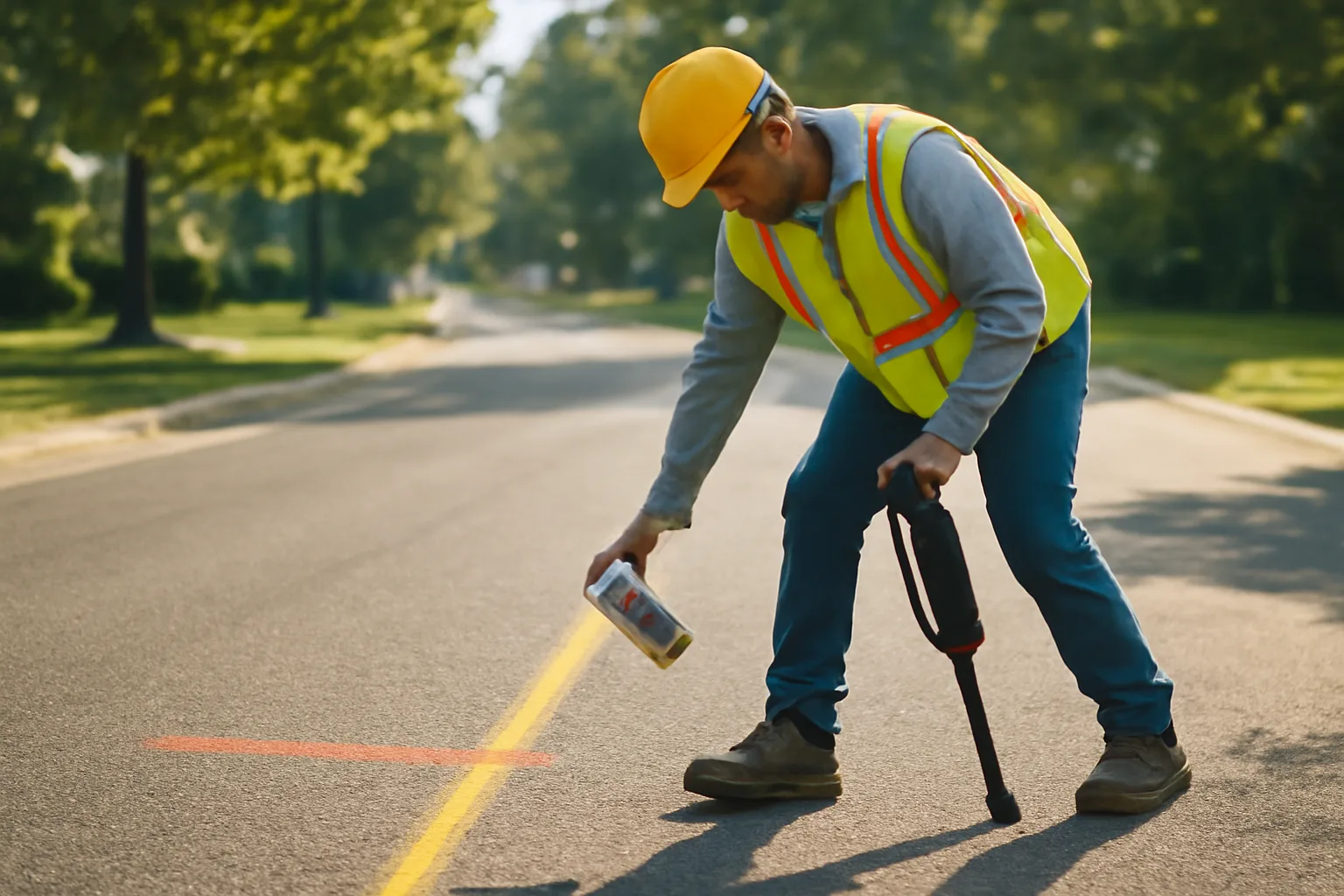
The locator’s job is to mark the horizontal path of underground lines with color-coded paint and flags. Once the marks are down, the excavator can proceed carefully. If no locator shows after two business days, the excavator has to call again. The service is free for excavators. Facility operators pay membership fees to fund the center [8]. This is the spine of utility locating in the state, and the board keeps it in line with Delaware Code.
What are the steps to start locating utilities in Delaware?
No state paperwork blocks your path, so the steps are practical. Get trained first. Enroll in a private course or join a company that trains its own people. Next, pick your employment path. Contract locating firms like USIC and Utiliquest work Delaware regularly, and direct utility employment is another route. Going independent means buying your own equipment and knowing the damage prevention law cold. After that, build contacts with contractors or utilities that need locates. Nothing else official stands between you and the work. No application. No fee. No exam. Just skill and showing up reliably.
What training and certification options do utility locators have?
Delaware mandates no credentials, but voluntary certifications make you easier to hire. The National Utility Locator Contractors Association (NULCA) offers a locator certification exam covering safety, theory, and field practice [6]. Staking University runs a hands-on boot camp that costs $1,495 and takes five days [3]. Other vendors like the Utility Locator Safety Council run similar training.
None of it is required by the state. Most entry-level locators learn on the job, then chase certification later. If you’re paying your own way, budget for travel and lodging on top of the course fee. The money usually comes back inside a few months of steady work.
What are common misconceptions about the Delaware utility locator board?
The biggest one is that the board licenses locators. It doesn’t. People hear “board” and picture a testing center. Others think the one-call center issues permits. It doesn’t either. The board oversees the program, not the workers.
Another myth: that you need a business license from the board to locate independently. You don’t. You’ll need a general Delaware business license only if you form an LLC or sole proprietorship, and that process is separate from the board completely. Keep these lines clear and you’ll skip the wasted hours chasing paperwork that was never there.
How does Delaware compare to other states?
Delaware’s approach is plain: no locator license, no board exam. That isn’t true everywhere. Florida runs a more formal certification structure for locators. California, Alabama, and Illinois each have their own twists on damage prevention law and one-call oversight. If you’re thinking about a move or multi-state work, read the local rules before you pack your gear. Our guides on the utility locator boards in Alabama, California, Florida, and Illinois lay out those differences. Knowing how each state runs saves you from assuming a license where none exists, or from showing up without one where it’s required.
What should you do next to start locating in Delaware?
Start with Title 26, Chapter 8 of the Delaware Code. It’s a short read, and it tells you what the board and the one-call center expect of excavators and facility operators. Then line up training if you’re serious. The LocatorPath 811 Locator Career Kit ($129 one-time) bundles study materials and field-reference tools that new locators lean on early. After that, get on the job. Delaware’s missing licensing hurdle makes entry fast, but the responsibility for accurate locates lands squarely on you. Confirm any detail with the board or your employer before you act on it.
Frequently asked questions
Do you need a license for utility locator in Delaware?
No. Delaware issues no state license or certification for utility locators. The Underground Utility Damage Prevention and Safety Board oversees the one-call system but credentials no individuals. Locators train through an employer or a private program and work without any state-issued permit.
How much does utility locator cost in Delaware?
There are no government licensing fees. Costs include training (around $1,495 for a private boot camp) and equipment ($1,000 to $3,000 for a basic locator). Going independent, total startup could run $3,000 to $6,000. Many employers cover training and tools, so out-of-pocket costs vary widely.
How long does utility locator take in Delaware?
No state timeline applies. A typical path is a week of formal training, then a few weeks shadowing a senior locator. Most new locators feel independent within two to four months. The one-call law requires at least two business days’ notice before digging, so you’ll need to respond fast.
Who regulates utility locators in Delaware?
No single agency regulates locators directly. The Underground Utility Damage Prevention and Safety Board advises the Public Service Commission on damage prevention rules. Facility operators (the utilities) are responsible for marking their lines and set the standards for the locators they employ or contract with.
What is Miss Utility of Delmarva?
It’s Delaware’s one-call center, covering Delaware and Maryland’s Eastern Shore. Anyone digging must notify Miss Utility at least two business days ahead. The center then alerts member utility companies, who send locators to mark lines. The service is free for excavators.
Is there a state certification for utility locators?
No. Delaware has no state-sponsored certification. Voluntary certifications come from private organizations like NULCA and Staking University, but they’re not required by law. Employers set their own training standards, and most locators start without any formal credential beyond on-the-job instruction.
What training is required to become a utility locator?
None is legally required. Employers usually provide on-the-job training, but many locators finish an external program like Staking University’s boot camp or pursue NULCA certification to stand out. The state mandates no minimum classroom hours.
How do I find a job as a utility locator in Delaware?
Contract locating firms like USIC and Utiliquest hire regularly in Delaware. You can also apply directly to utility companies or check with underground construction firms. A training certificate helps, but many companies hire entry-level candidates and train them internally.
What are the responsibilities of the Underground Utility Damage Prevention Board?
The nine-member board advises the Public Service Commission on standards, complaint procedures, and enforcement of the one-call law. It meets at least quarterly and issues no licenses or certifications to locators.
Can I work as an independent locator in Delaware?
Yes. With no license required, you can work independently if you have the training, equipment, and willing clients. You’ll need your own insurance and a general Delaware business license if you form a legal entity. You still must follow the one-call process for every locate.
Do I need insurance to locate utilities in Delaware?
The state requires no locator-specific insurance, but if you work independently, clients and utility companies typically require general liability and errors and omissions coverage. If you’re an employee, your employer’s policy covers you.
Where can I get a utility locator certification near Delaware?
Staking University holds boot camps in various locations, including periodic sessions in the Mid-Atlantic. NULCA offers a certification exam that can be taken at approved testing centers. Check their websites for current schedules nearest to Delaware.
Sources
- Delaware Code Title 26, Chapter 8: The Underground Utility Damage Prevention and Safety Board consists of nine appointed members and advises the Public Service Commission on damage prevention.
- Delaware Code Title 26, Chapter 8: Excavators must notify the one-call center at least two but not more than ten business days before excavating.
- Staking University, Locator Training Boot Camp: A five-day locator training boot camp costs $1,495.
- PHMSA, Pipeline Safety and Damage Prevention: Federal pipeline safety programs support state one-call and damage prevention systems.
- Miss Utility of Delmarva: Delaware’s one-call center takes locate requests through 811 for excavation in the state.
- National Utility Locator Contractors Association (NULCA): NULCA offers a voluntary utility locator certification program.
- Delaware Public Service Commission: The Public Service Commission oversees Delaware’s utility damage prevention program and its advisory board.
- Miss Utility of Delmarva, FAQ: The one-call service is free for excavators; facility operators fund it through membership fees.